Records were scattered across suppliers, certifiers, and brands. OriginTag explored how to bring them into a story shoppers could follow.

Redefining transparency and trust in high fashion.
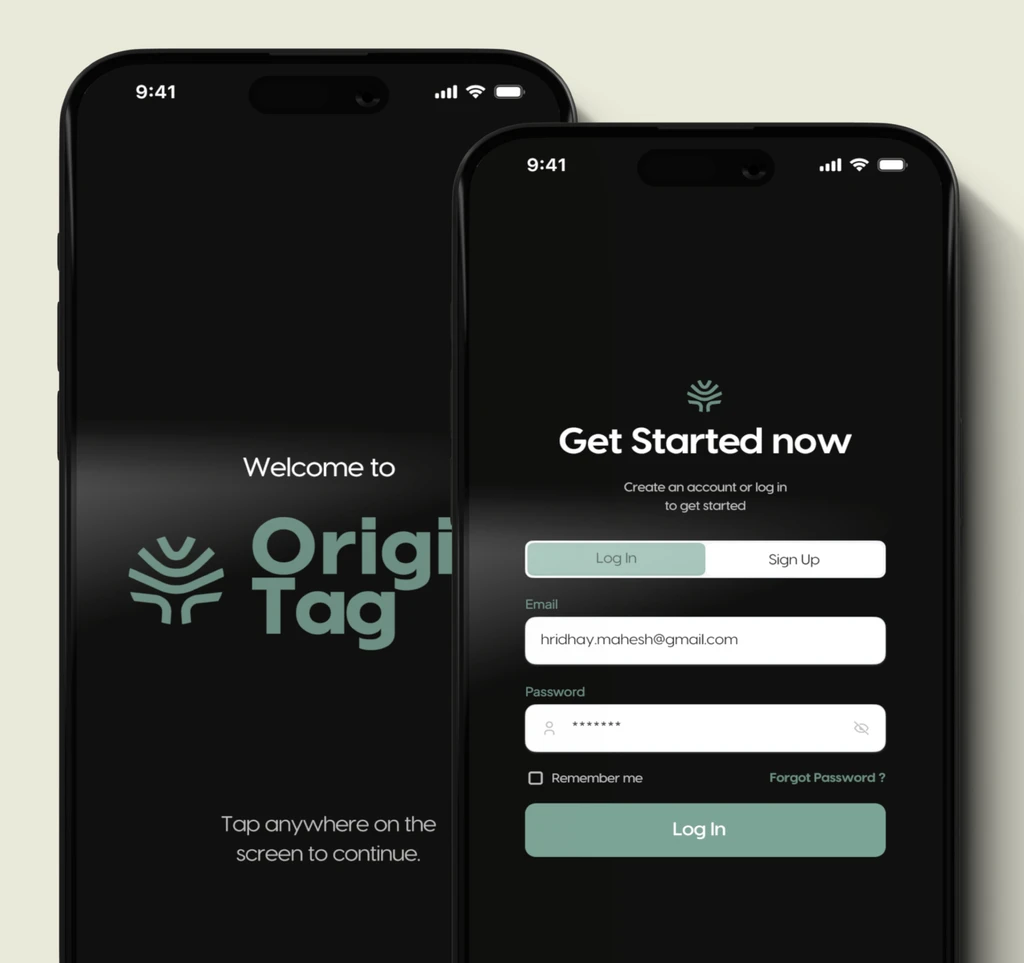
OriginTag connects luxury shoppers with the story behind their clothing. An NFC tap or QR scan brings materials, production, and certifications into one garment record—designed to continue through care, ownership, and resale.
My contribution. I led research, service design, prototyping, testing, and video production.
The concept
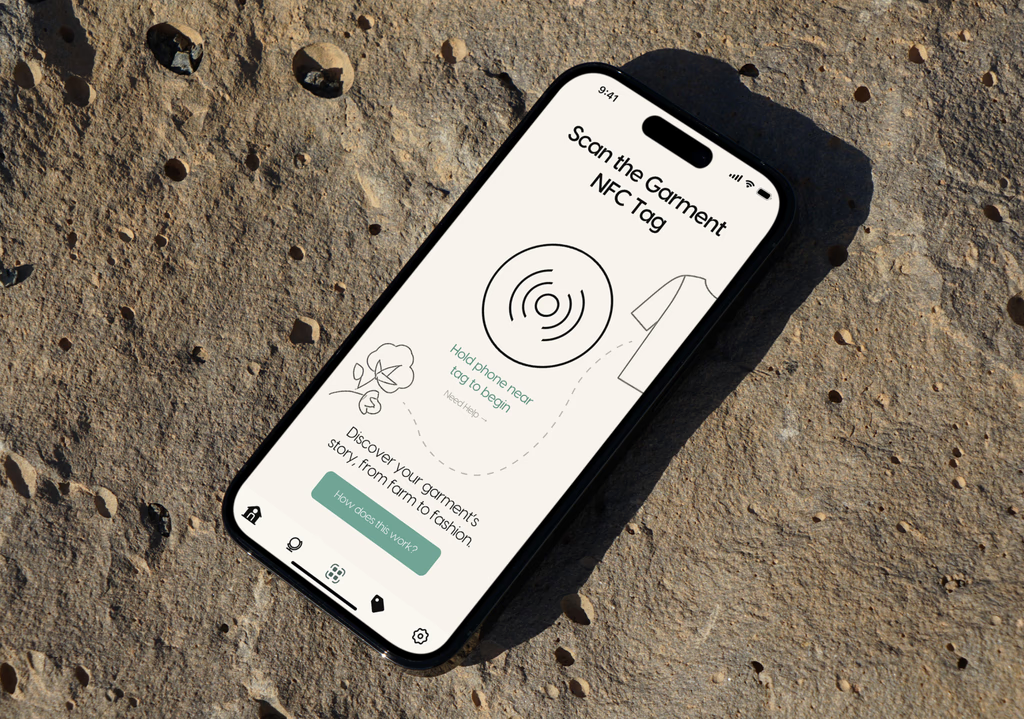
Access the garment journey through one tap.
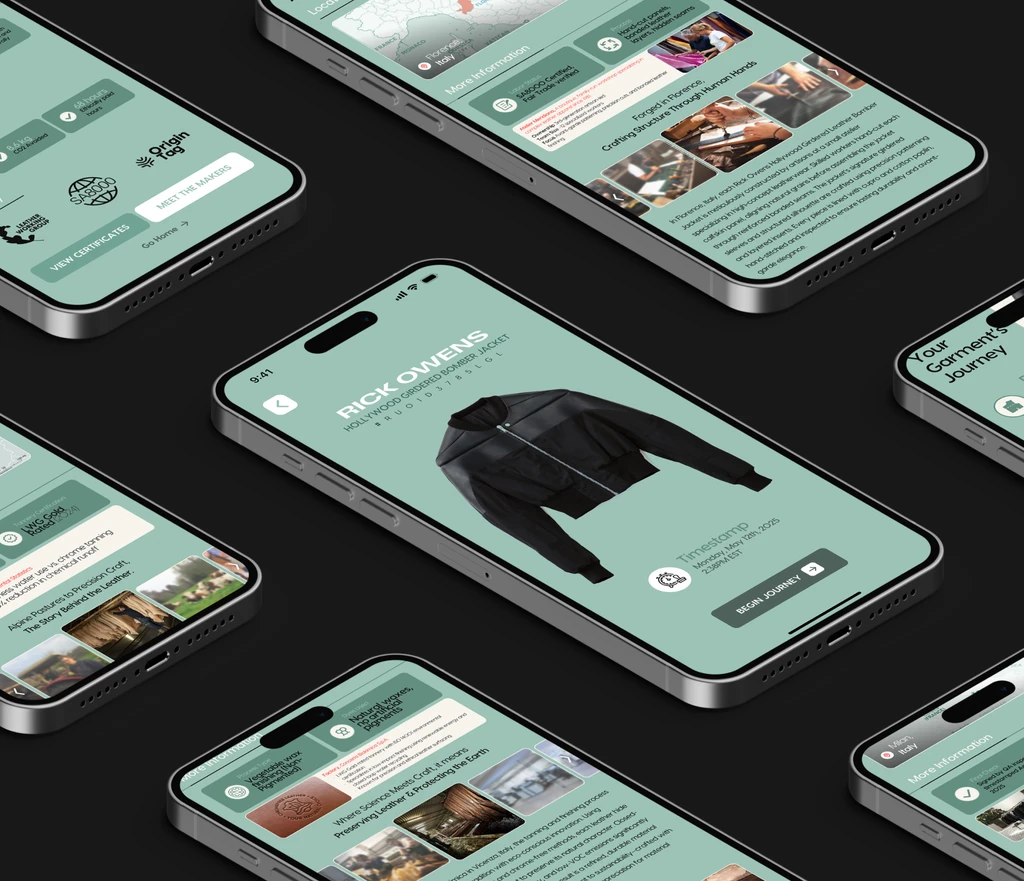
One profile brings origin, production history, partner documentation, and certifications together.
Problem
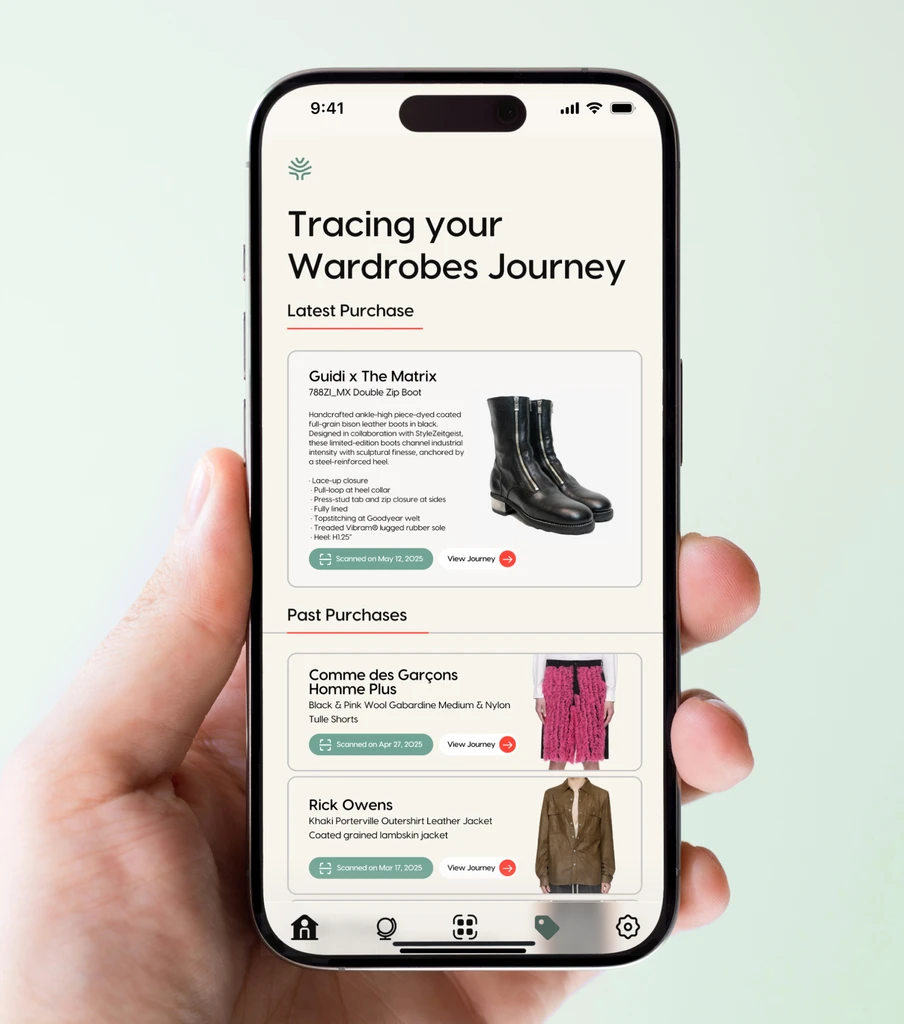
The evidence was missing from the shopping experience.
Three gaps stood between shoppers and trust.
Interviews with specialists in ethical sourcing, fashion strategy, traceability, and textiles explored where material knowledge gets lost between production and purchase.
Across the service system
Evidence was fragmented
Records lived across suppliers, certifiers, and brands.
4 research perspectives
Proof was hard to interpret
Technical certification did not support quick decisions.
9 journey stages
History ended at checkout
Information rarely continued into care or resale.
Journey map
Locate the moments when trust breaks.
The journey highlighted two gaps: interpreting proof and carrying history into resale. The trust curve represents a hypothesis, not measured scores.
Position map
Define the concept’s intended position.
The intended position combines accessible storytelling with existing evidence, not independent verification. This is a design target, not a measured competitive result.
Build one story from scattered records.
Assign the garment identity
An NFC-enabled OriginTag is attached during production and linked to a secure garment record.
Connect partner records
Mills, farms, dye houses, manufacturers, and certifiers contribute production and sourcing information.
Present the garment story
A smartphone tap opens the documented garment journey for purchase, ownership, and resale.
Ecosystem map
Make responsibility visible.
A garment record depends on several organizations. The ecosystem separates who supplies information, who verifies it, and who maintains it after purchase—making ownership gaps visible.
Service blueprint
Connect each interaction to the work behind it.
A simple scan depends on work behind the interface. The blueprint connects customer actions to record owners and verification handoffs, exposing the coordination needed to keep the story current.
Sitemap
Keep evidence close to the garment story.
Home, Explore, Scan, and History share one garment record, keeping proof close to the story.
User flow
Design the unsuccessful routes too.
The flow includes QR fallback, unrecognized codes, and access to issuers when proof is expired or unverified.
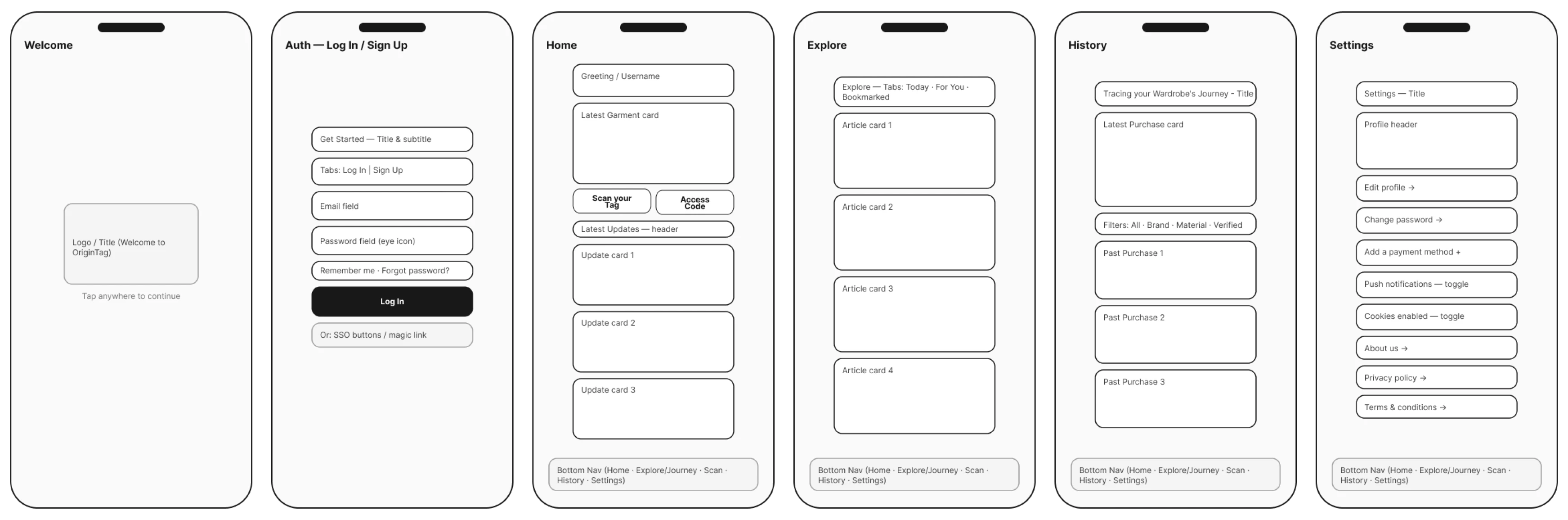
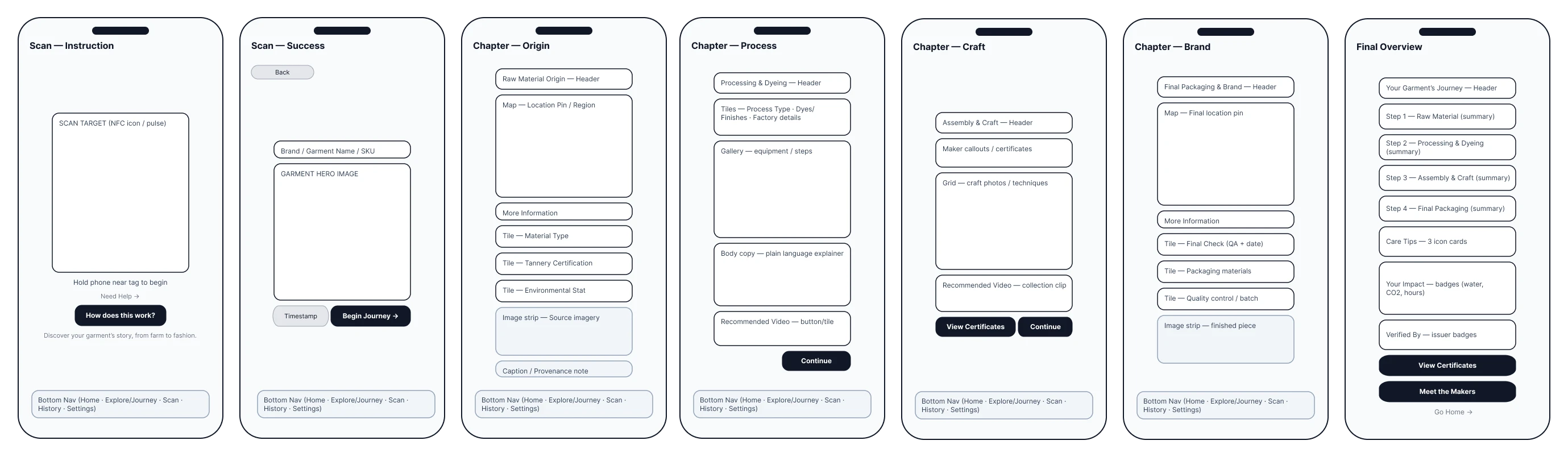
The story made sense. Verification needed clarity.
Seven early-stage users reviewed the prototype’s scanning experience, garment journey, and supporting information. Feedback focused on navigation, credibility, and value after purchase.
Keep the visual journey. Participants found the timeline intuitive and valued saved garment history, supporting a story-led experience with records available to revisit.
Make proof easier to find. Some skipped certification documents or questioned the certifiers. Clearer document prompts and issuer explanations are priorities for the next iteration.
Reduce reading and scanning friction. Dense copy and small controls slowed users, while one preferred QR to NFC. Next steps are shorter summaries, more readable controls, and clearer scan guidance.
Solution
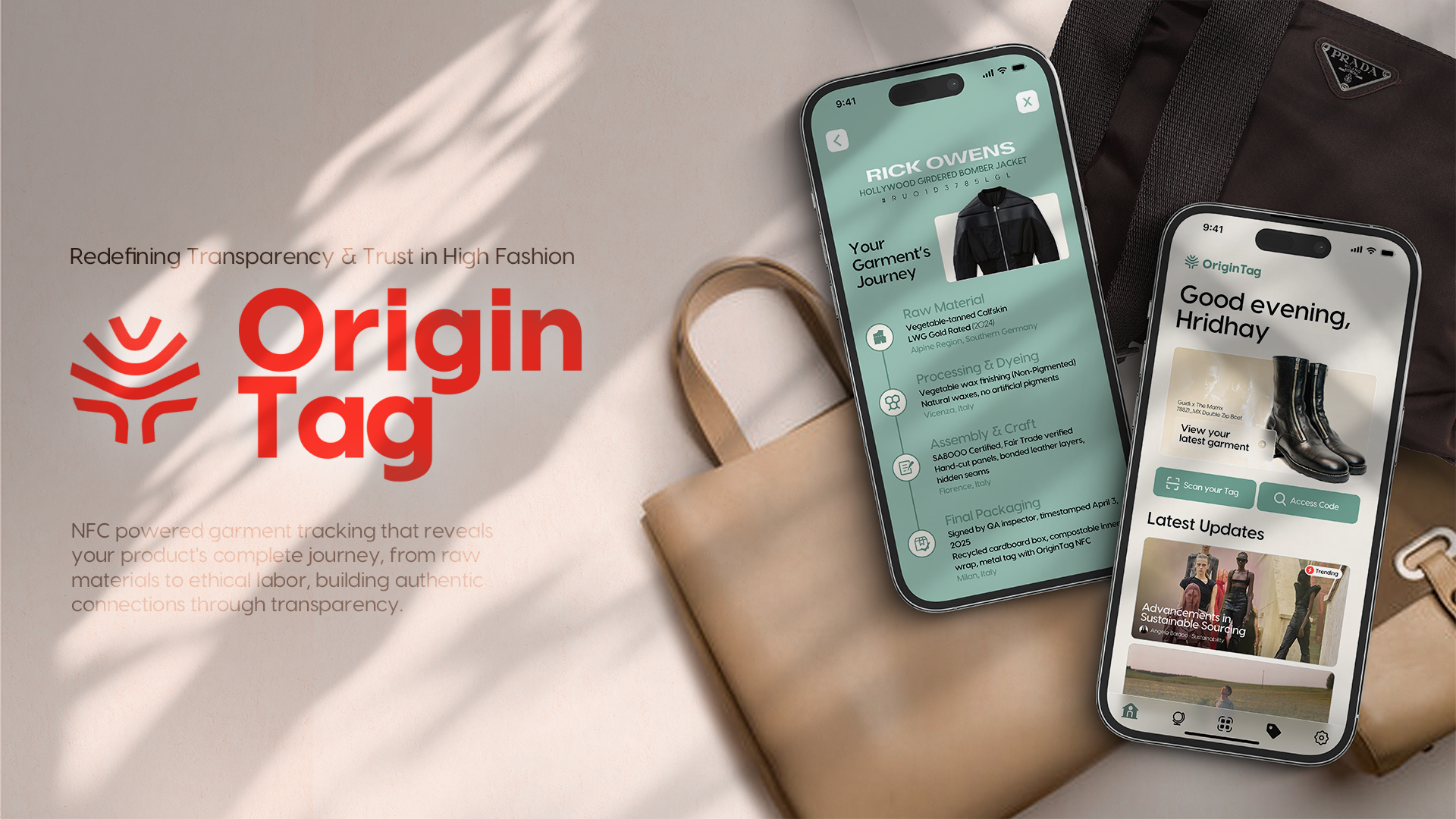
The garment story, in your hands.
Tap a garment, explore its evidence, and keep its history accessible after purchase.
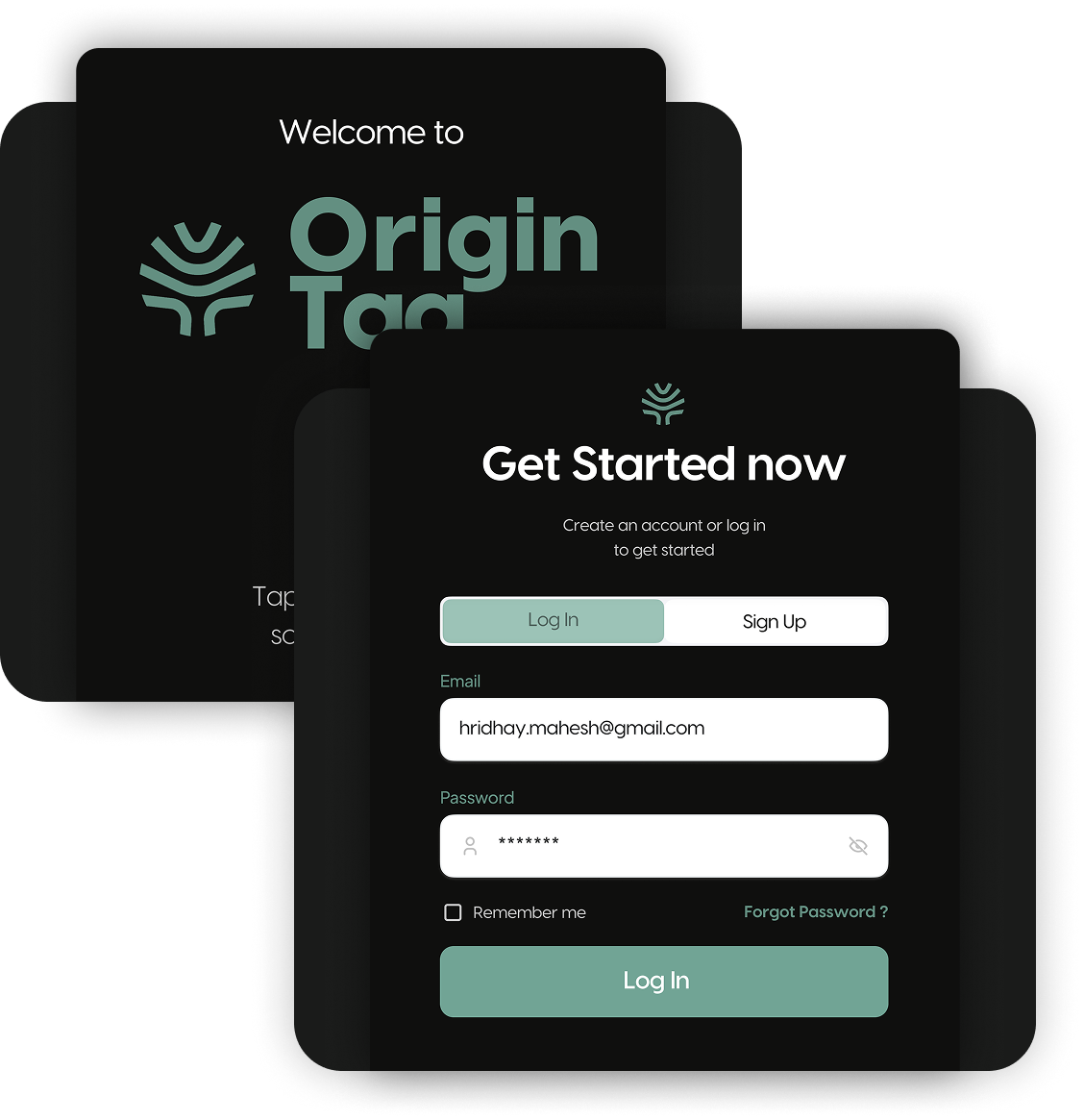
An account keeps personal ownership history separate from the garment’s sourcing story, giving users a place to return to their records.
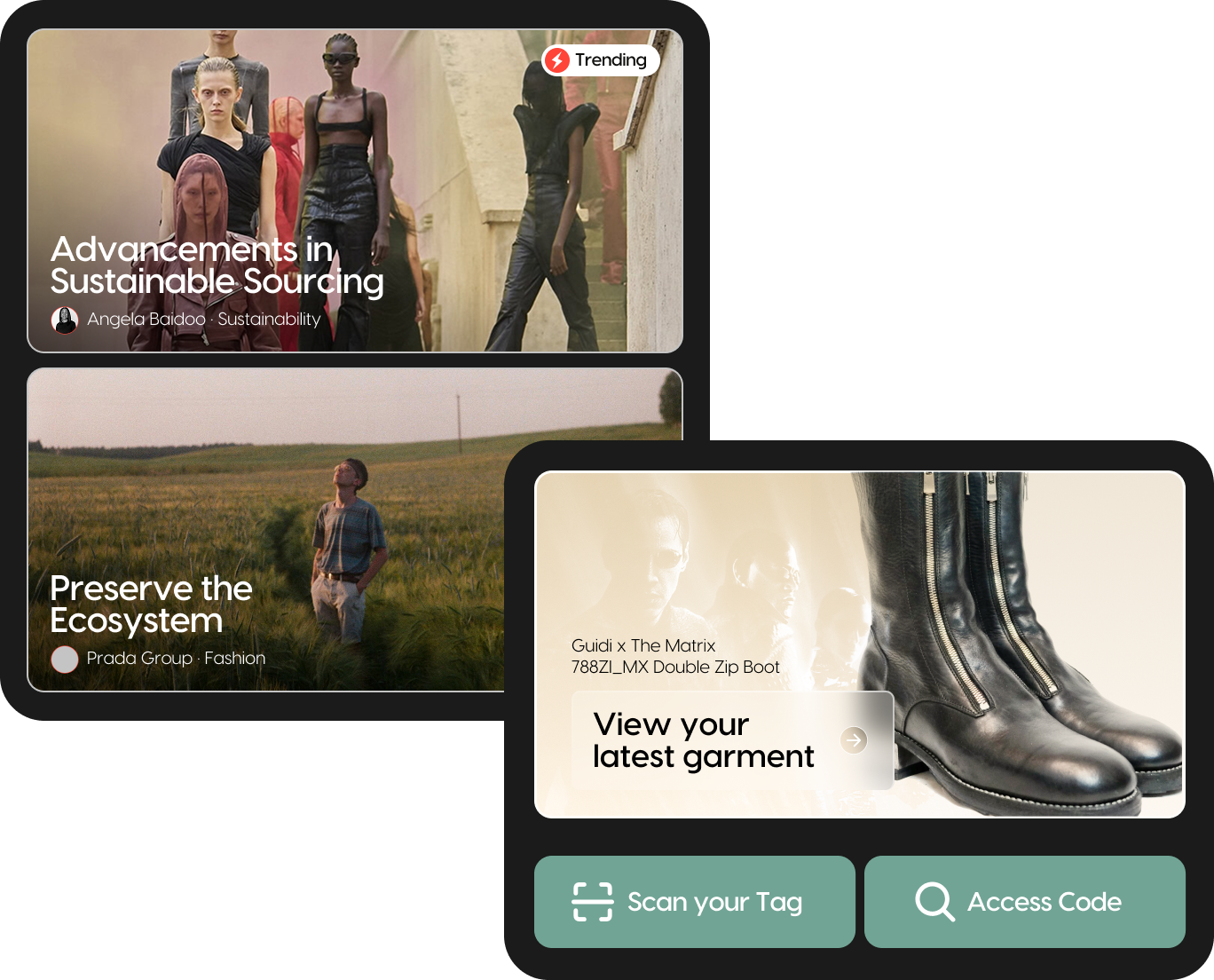
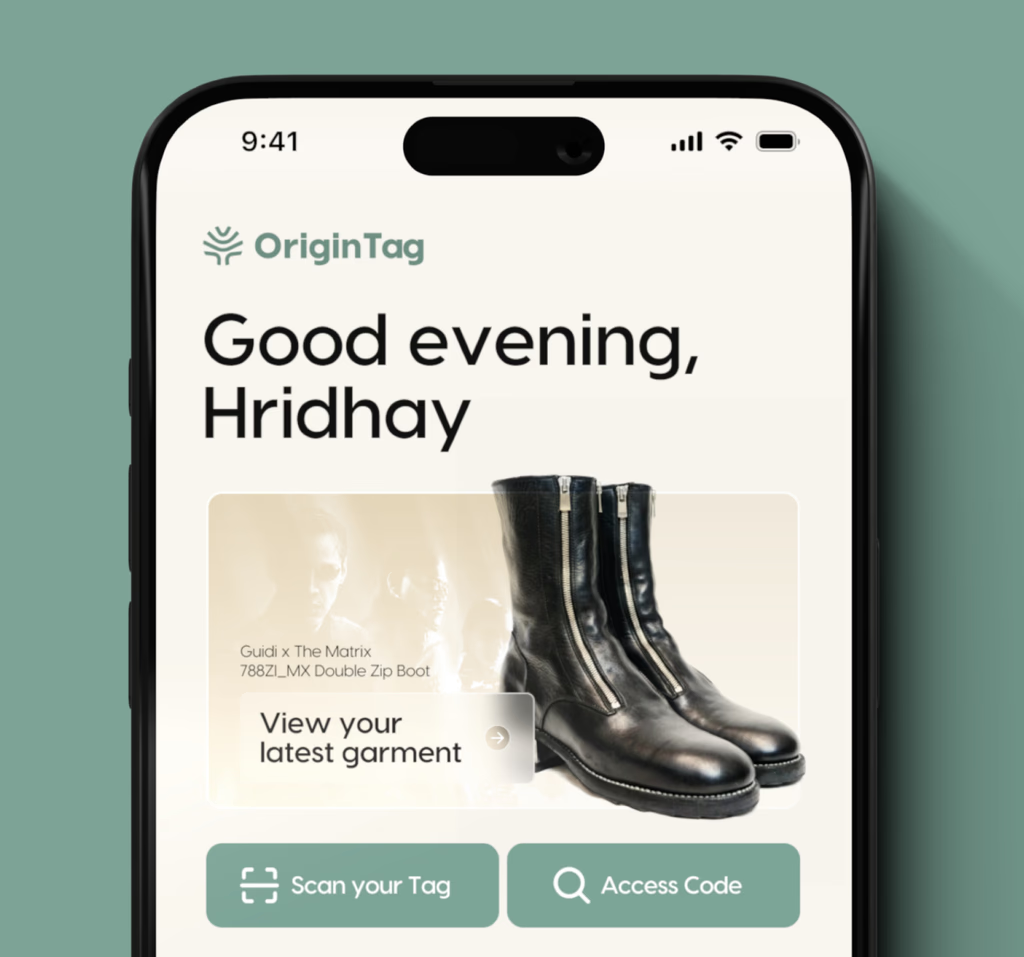
Scanning and saved garments share one entry point, supporting both a first encounter in store and a return visit after purchase.
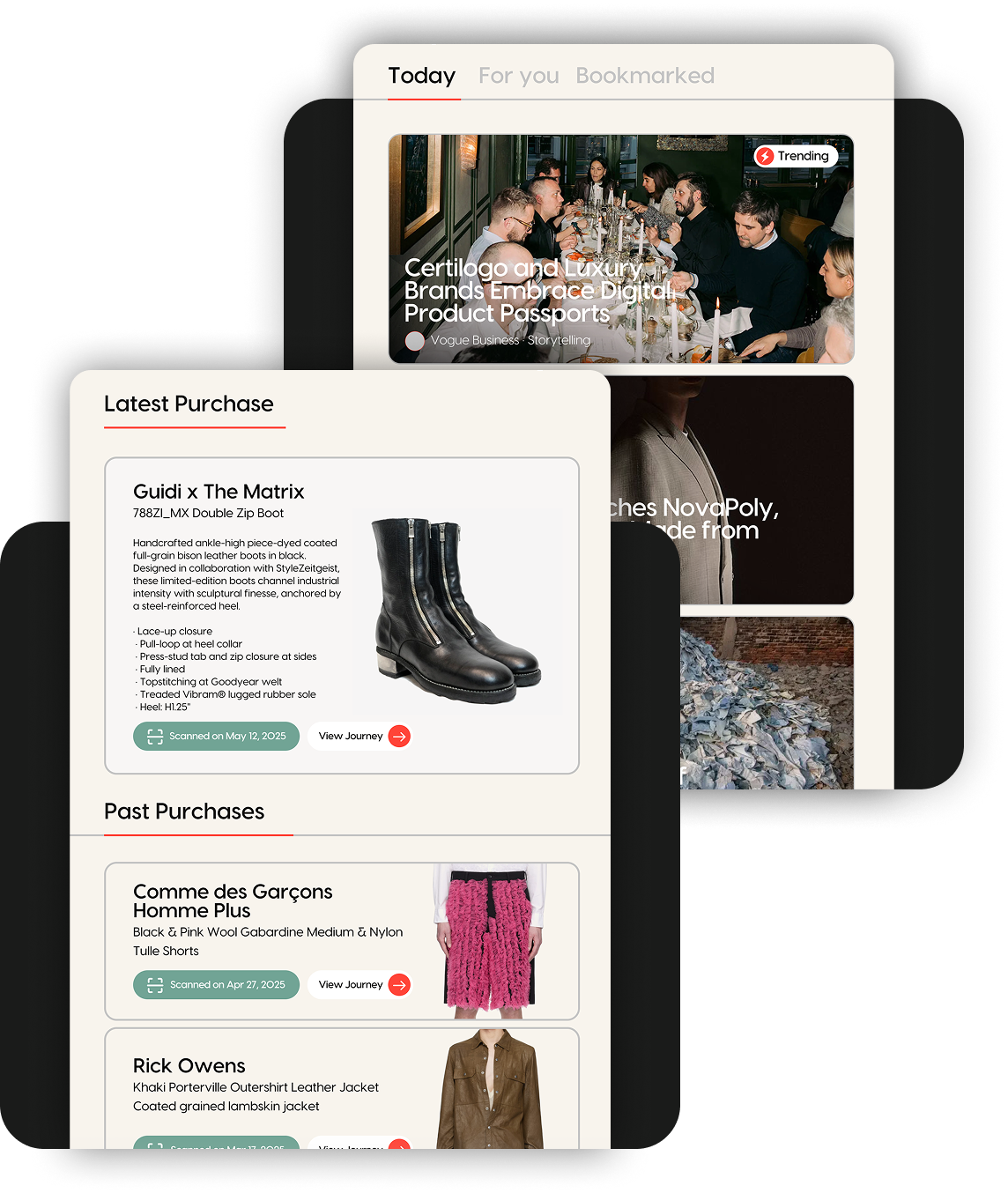
Stories explain the people and processes behind a piece; saved history keeps that information useful after the initial scan.
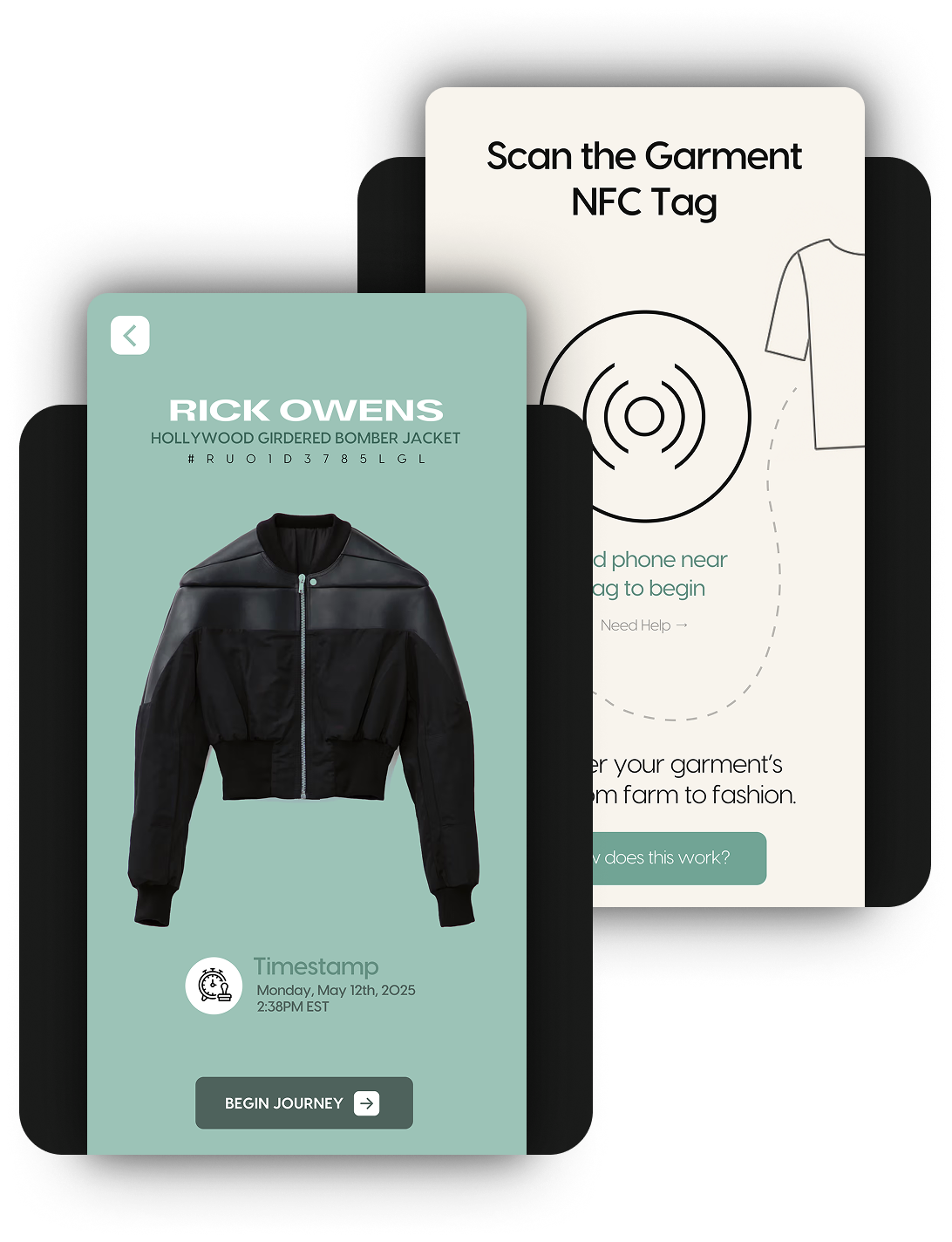
NFC provides a direct route from garment to story. QR offers an alternative when tapping is unfamiliar or unavailable.
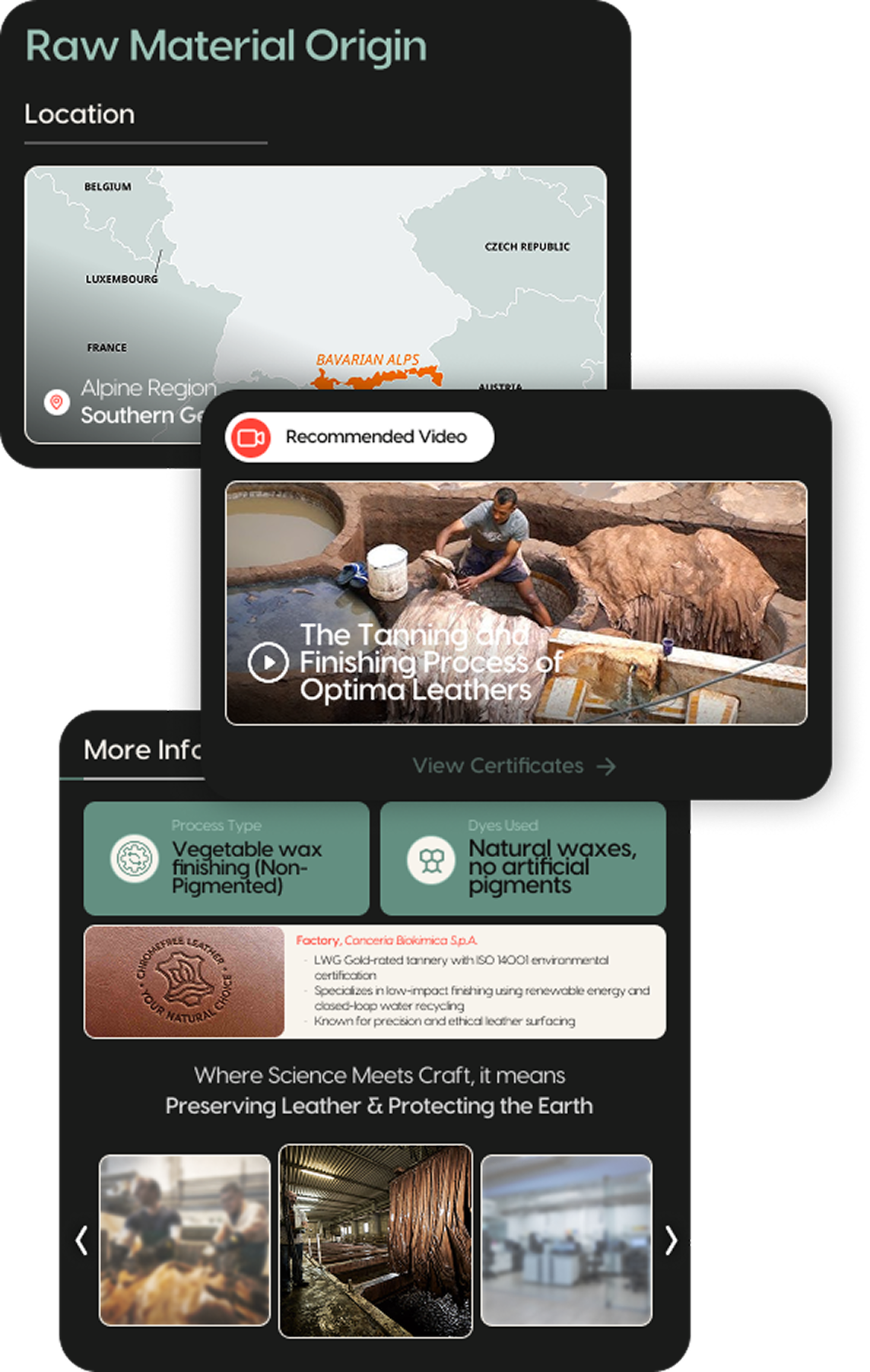
Materials, makers, and certifications sit beside their sources so shoppers can move from a story to its supporting evidence.
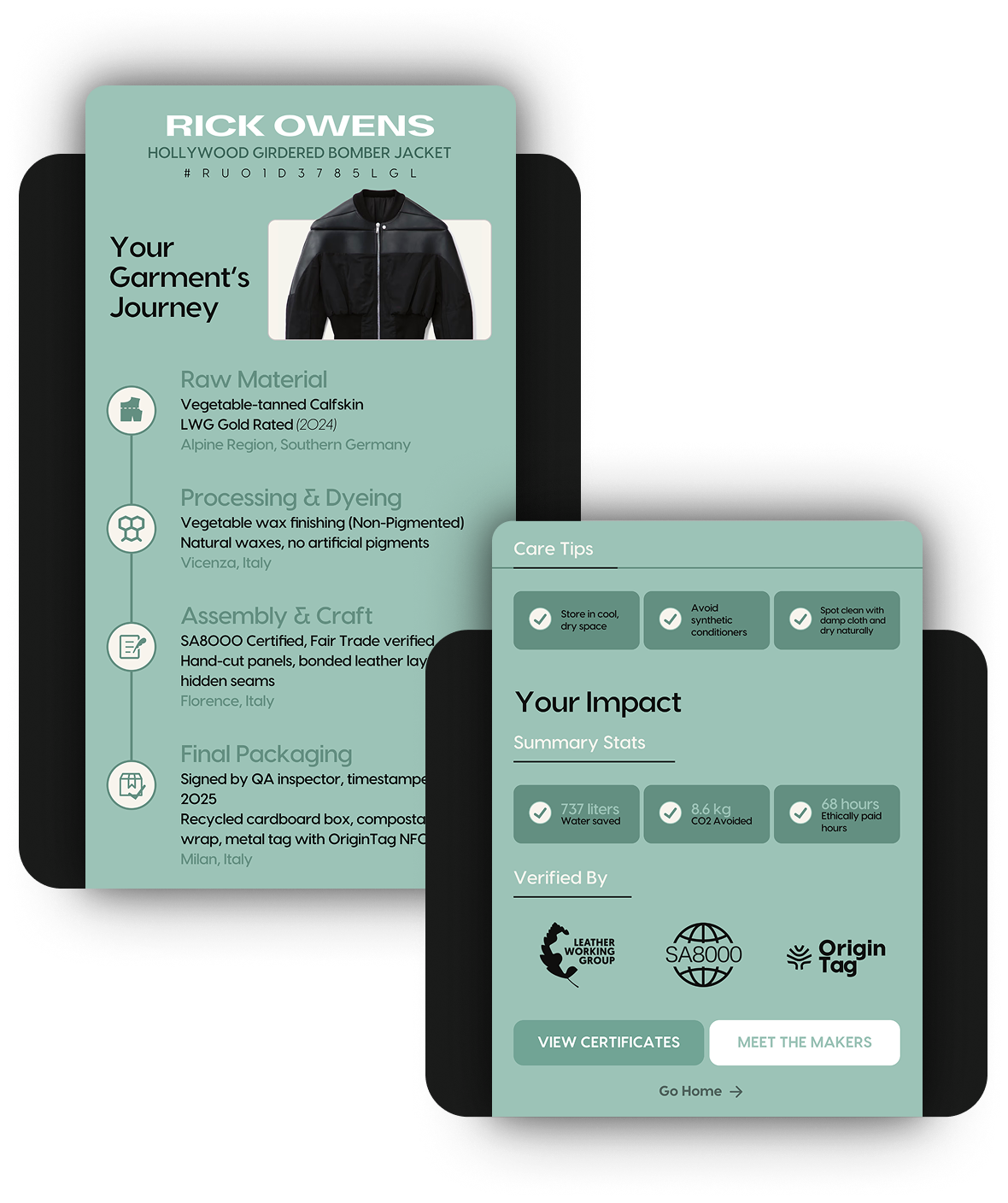
A summary offers a quick read of care and impact, with supporting certificates available for shoppers who want to investigate further.
OriginTag advertisement
See a garment’s story come to life.
Reflection
What designing with shared evidence taught me.
Define the evidence before the interface
Service mapping shifted my focus from the visual story to the records behind it. Defining those first made the interface clearer.
Validate operational ownership earlier
Involve suppliers, certifiers, and brand operations earlier to validate who creates, verifies, and maintains each record.
Test with live garment records
Pilot real sourcing and certification records across purchase, care, and resale to test accuracy, exceptions, and value beyond the first scan.
Full project