A connected product for support during moments of panic.
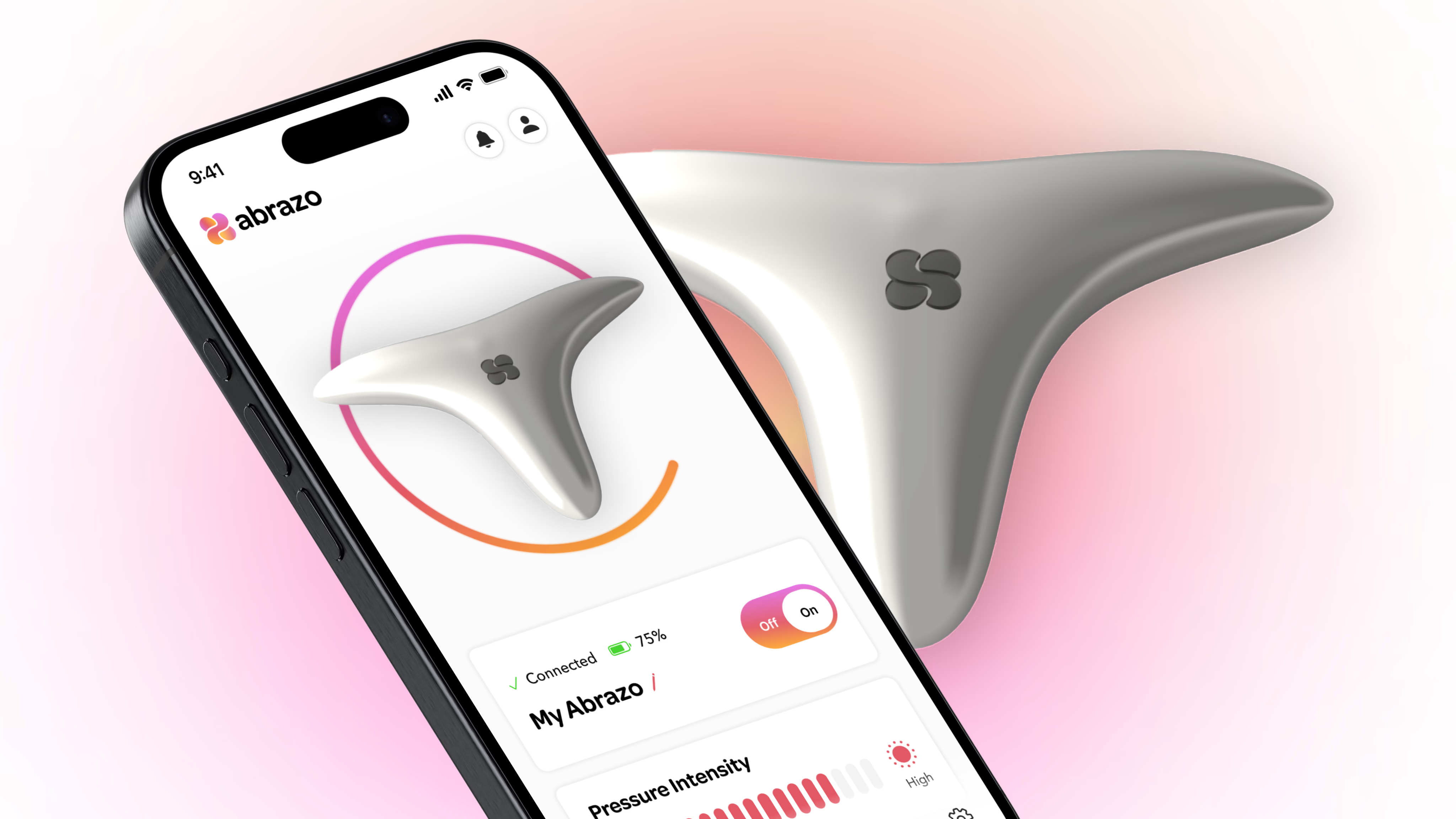
Abrazo is a ten-week concept pairing a wearable with an app for moments when panic makes seeking help difficult. It explores sensory support, guided relief, and optional sharing with trusted people.
Role
Research Lead Service Designer UI Designer Video Producer
Duration
10 weeks
Tools
Figma, FigJam, Rhino, Miro, Adobe After Effects, Adobe Premiere Pro
Team
Mariantonia Villaquiran, Nick Pratt, Xirun Zhou
My contribution
I led research and service design, contributed to the interface and brand system, and independently produced the advertisement.
Research and service designLed research into product needs, demographics, the market, personas, journey mapping, and service blueprints.
Interface systemHelped shape reusable components, brand rules, emotional theming, and accessibility improvements with the team.
AdvertisementWrote the script, animated the concept, edited the footage, and delivered the final advertisement independently.
Recognition / 2024
Recognized for the connected physical and digital concept.
One proposed system across preparation, response, and reflection.
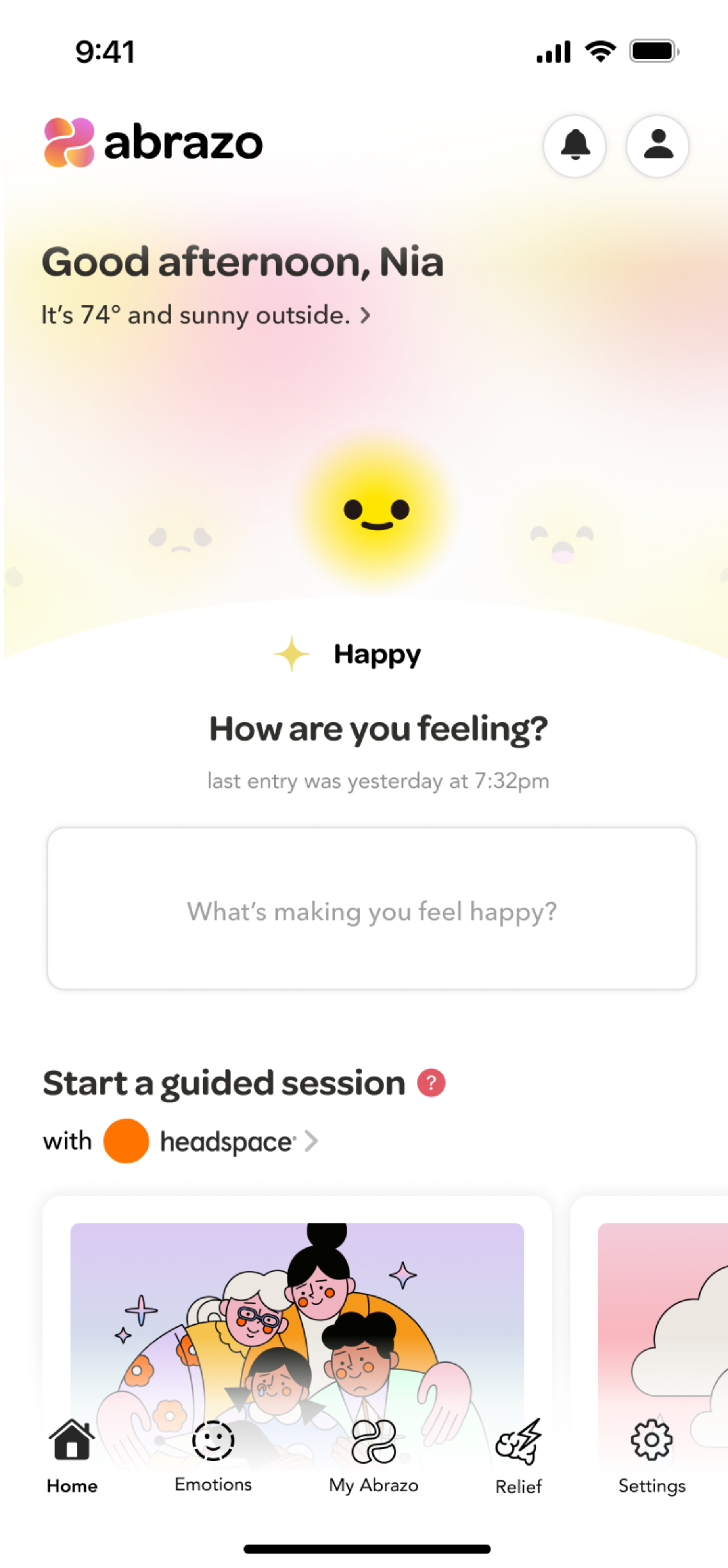
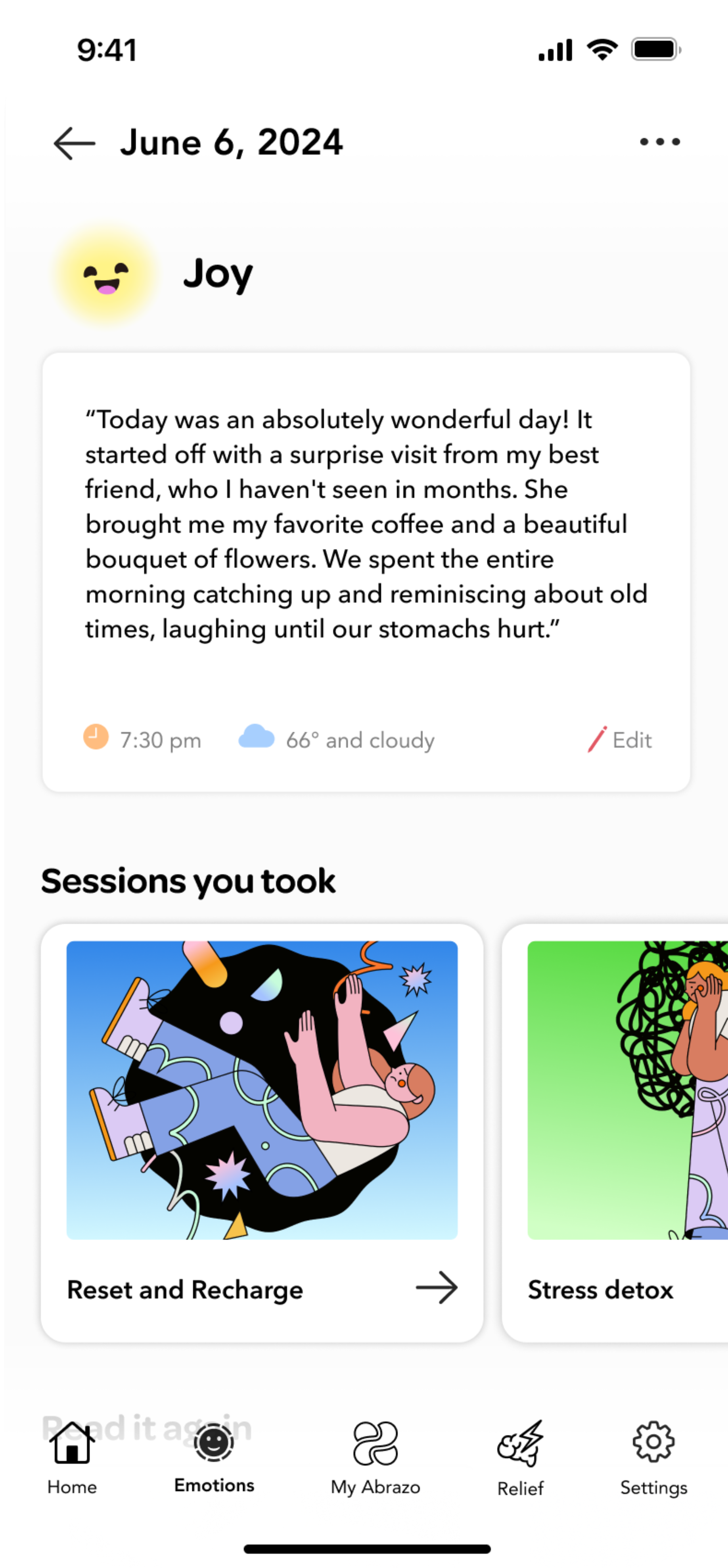
Check in without frictionLog an emotion, add context, and see support matched to the current state.
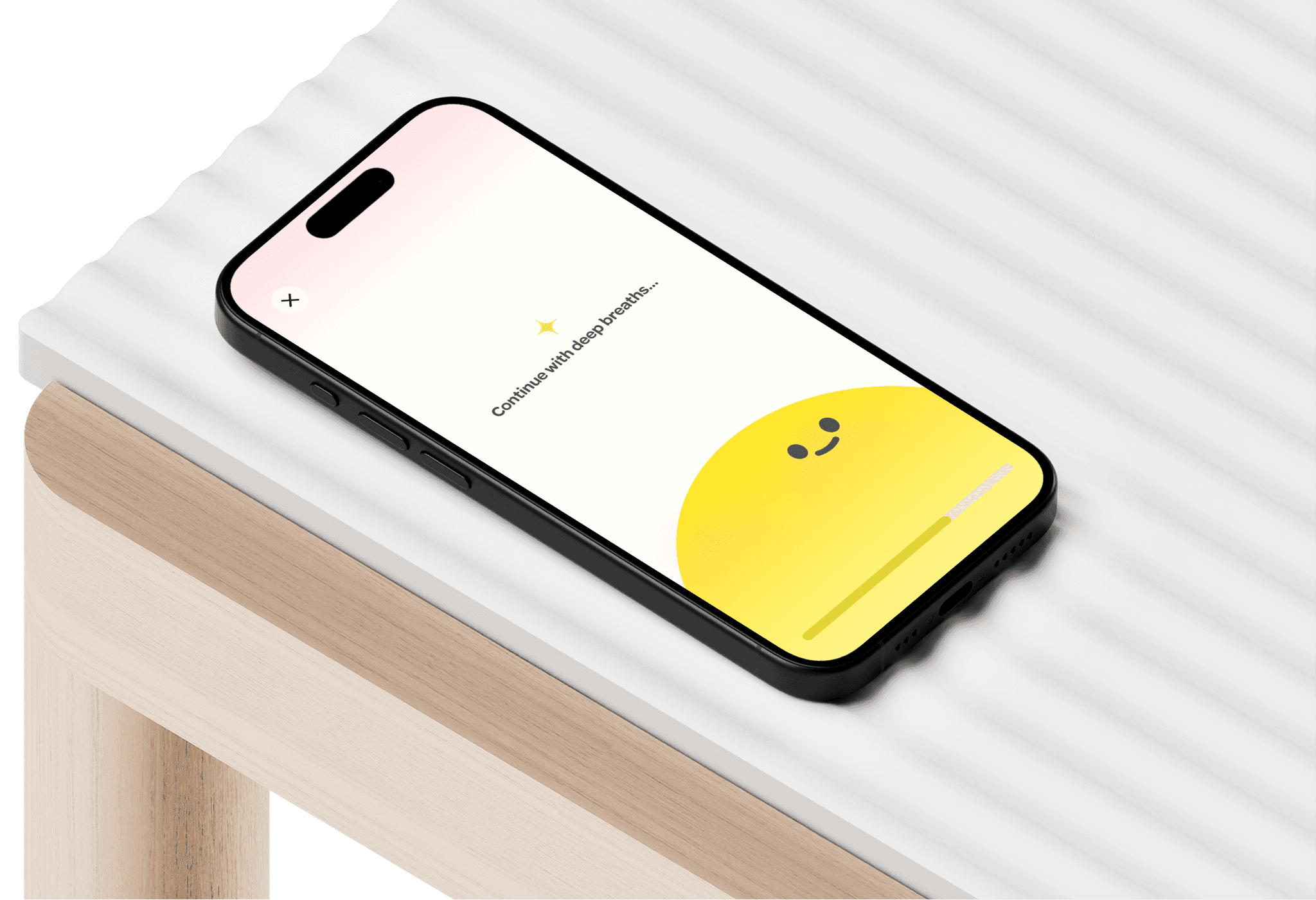
Reach support quicklyUse guided sessions, educational resources, imagery, and voice guidance when visual attention is limited.
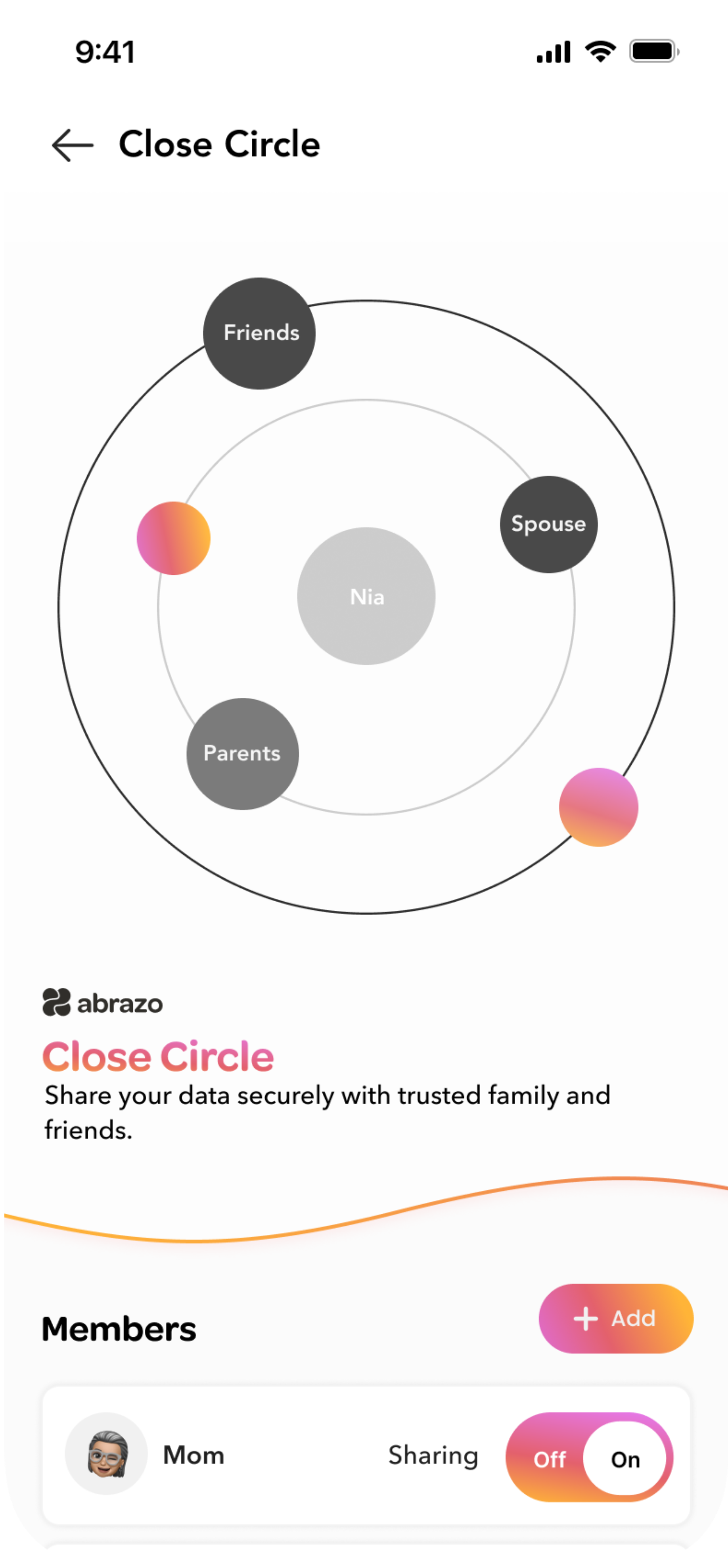
Share on the user’s termsManage trusted people and permissions without making social contact a requirement.
Personalize the wearableAdjust proposed pressure and breathing behavior while keeping the conceptual device discreet.
Project framing
Support often arrives after the hardest moment has passed.
Challenge
Respond as panic emerges.
Appointments and familiar support may not be available in the moment.
Opportunity
Offer private, immediate support.
Combine a calming interaction with resources before and after the event.
Team goal
Support autonomy without isolation.
Keep trusted sharing available, optional, and reversible.
Concept scope: Abrazo was designed and usability-tested as a student interaction and product concept. Panic detection, biometric sensing, therapeutic effectiveness, safe pressure and temperature ranges, and Apple Health integration were not clinically or technically validated.
Design process
From an unmet moment to a tested physical and digital system.
Research shaped the service journey, interface architecture, and two rounds of testing.
52survey participants11 + 1end-user and expert interviews13round-one tasks2testing rounds with returning users5physical-concept interviews
Discover
Understand what people need when reaching out feels difficult.
I connected market context with interviews and a survey to understand which forms of support people would accept and control.
Market context
Establish the scale of the unmet moment.
11%
About 37 million people in the U.S. experience a panic attack each year.
3%
About 10 million people in the U.S. have a diagnosed panic disorder.
16–30
The age range identified as experiencing the most panic attacks.
1 in 4
The reported share who seek treatment for panic or anxiety disorders.
Primary research
Comfort only worked when people retained control.
Human support
Comfort and burden coexisted
People valued company but sometimes hesitated to reach out.
Relief behavior
Distraction was temporary
Distress often returned when the distraction ended.
Expert perspective
Sensory control mattered
Texture, pressure, and heat could make wearables unusable.
52 responses
Measure support for the emerging direction.
66%Had tried deep-pressure techniques.
74%Would use a product that mimics a hug.
83%Wanted provider data sharing.
98%Wanted adjustable pressure intensity.
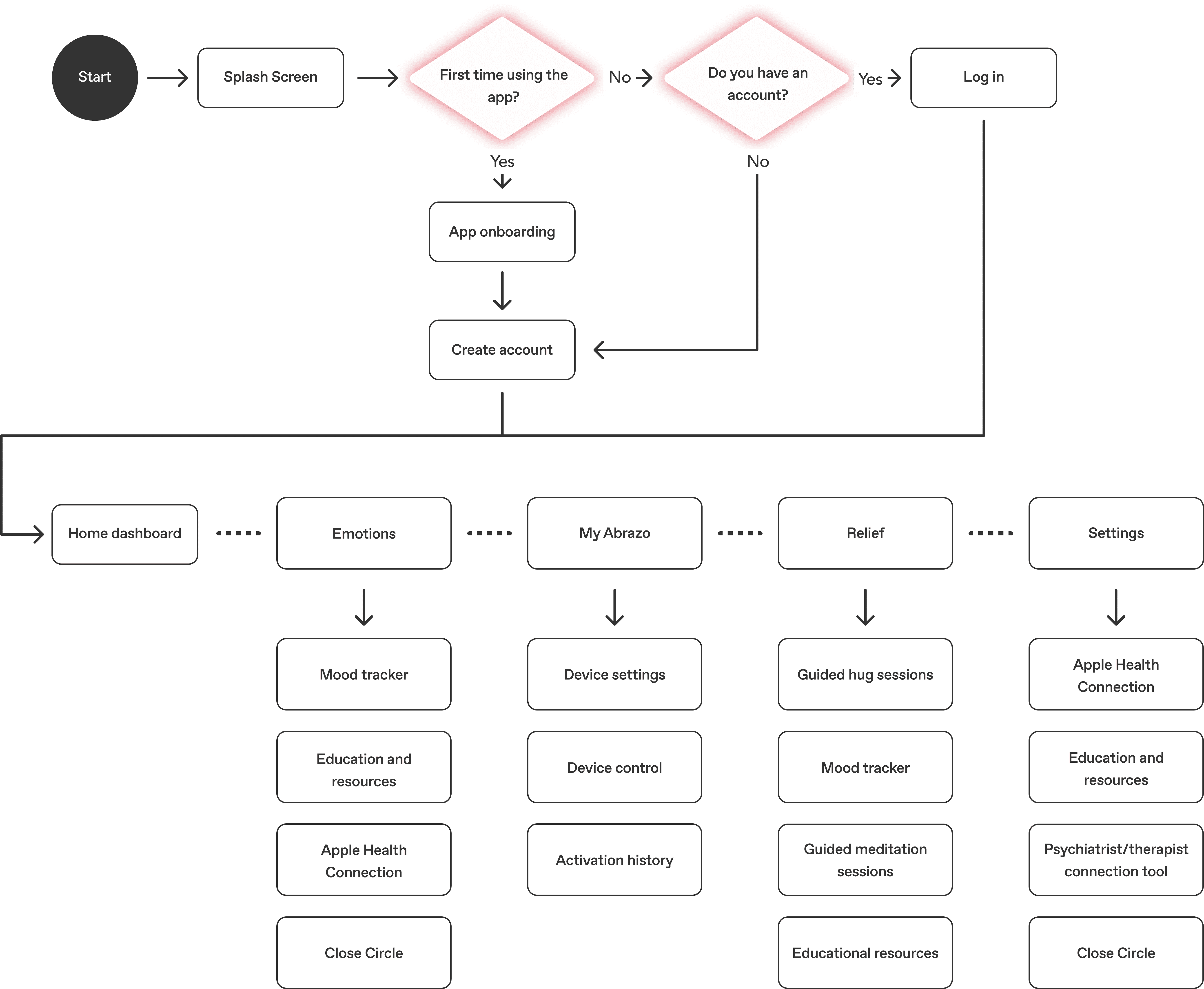
User flow
Give each need a predictable destination.
Preparation, relief, device control, reflection, and optional sharing.
What this changed
The concept shifted from a single emergency interaction to a service spanning preparation, low-load response, and optional reflection.
Define
Design across the full arc of a panic episode.
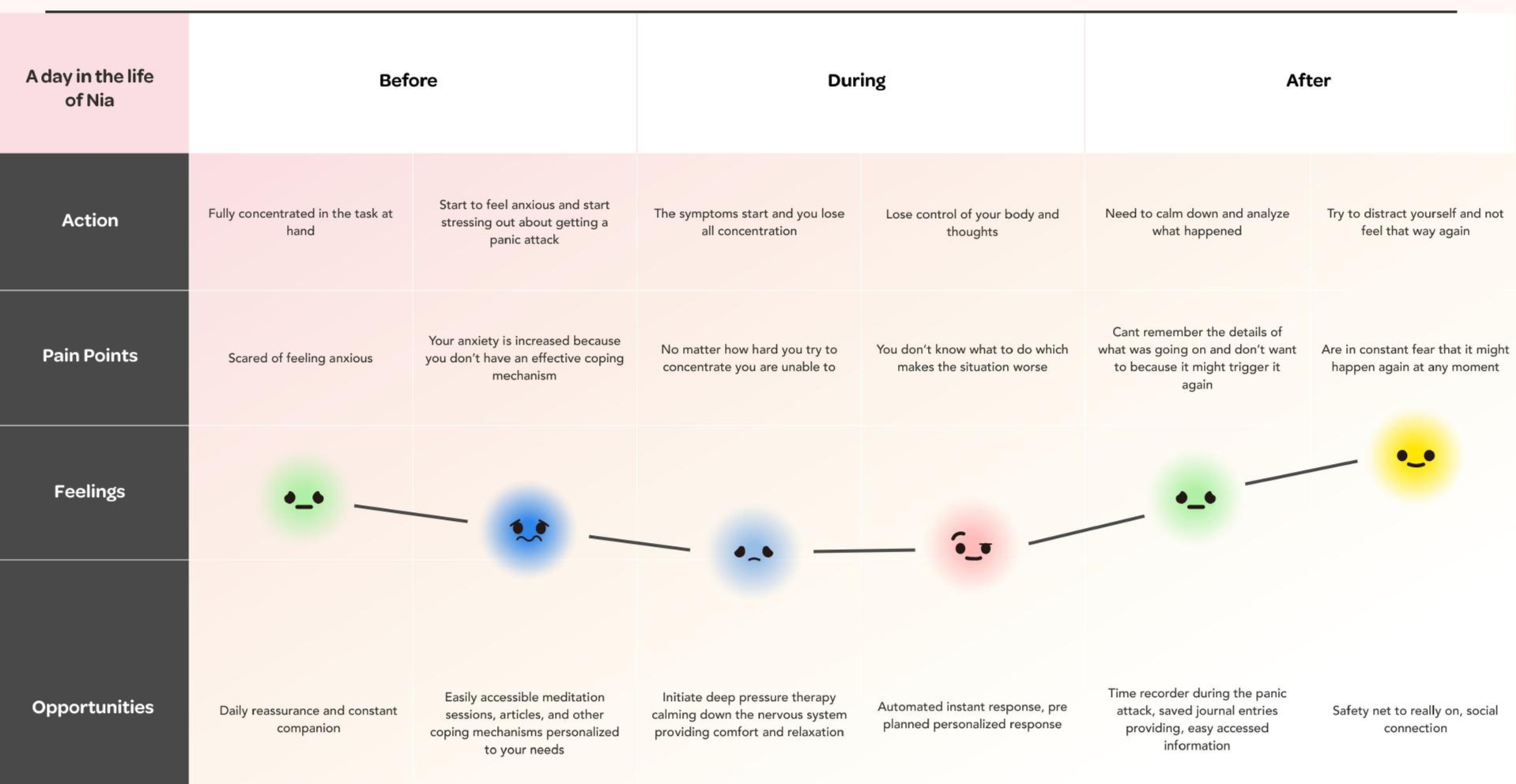
The journey map connected preparation, immediate support, and reflection into one service.
Before, during, afterMapped needs across the full episode, revealing where preparation, low-load relief, and optional reflection had to connect.
Journey priorities5 connected needs
01Immediate support
02Safe expression
03Simple interaction
04Emotional engagement
05Accessible resources
Before
Build readiness
Set preferences and trusted connections in advance.
During
Reduce cognitive load
Keep relief direct, clear, and multimodal.
After
Preserve context
Reflect and share only when the user chooses.
Central decision
The proposed wearable focused on immediate physical support, while the app handled preparation, control, reflection, and permissions.
Develop
Turn an emotional service into understandable tasks.
I helped translate the service into reusable components, predictable navigation, and an emotional color system.
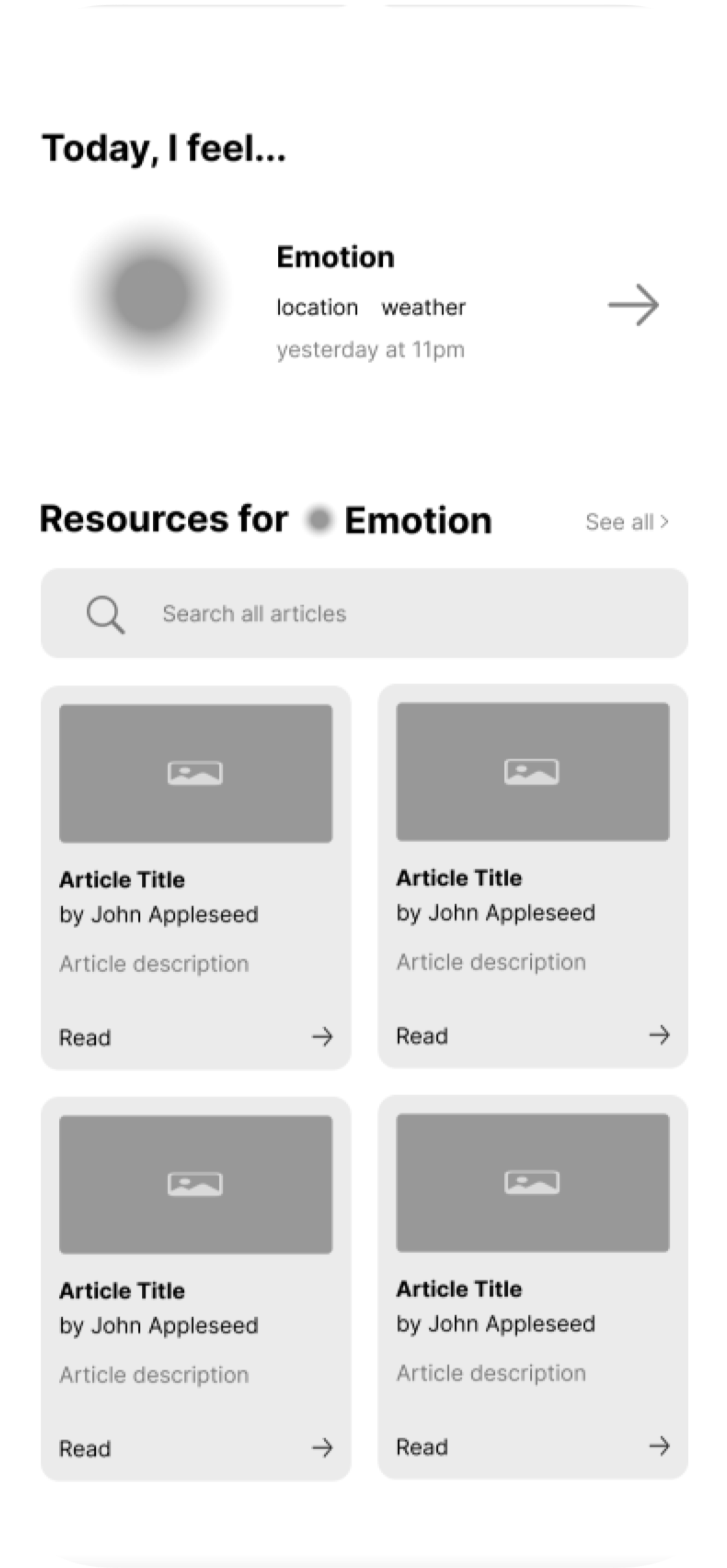
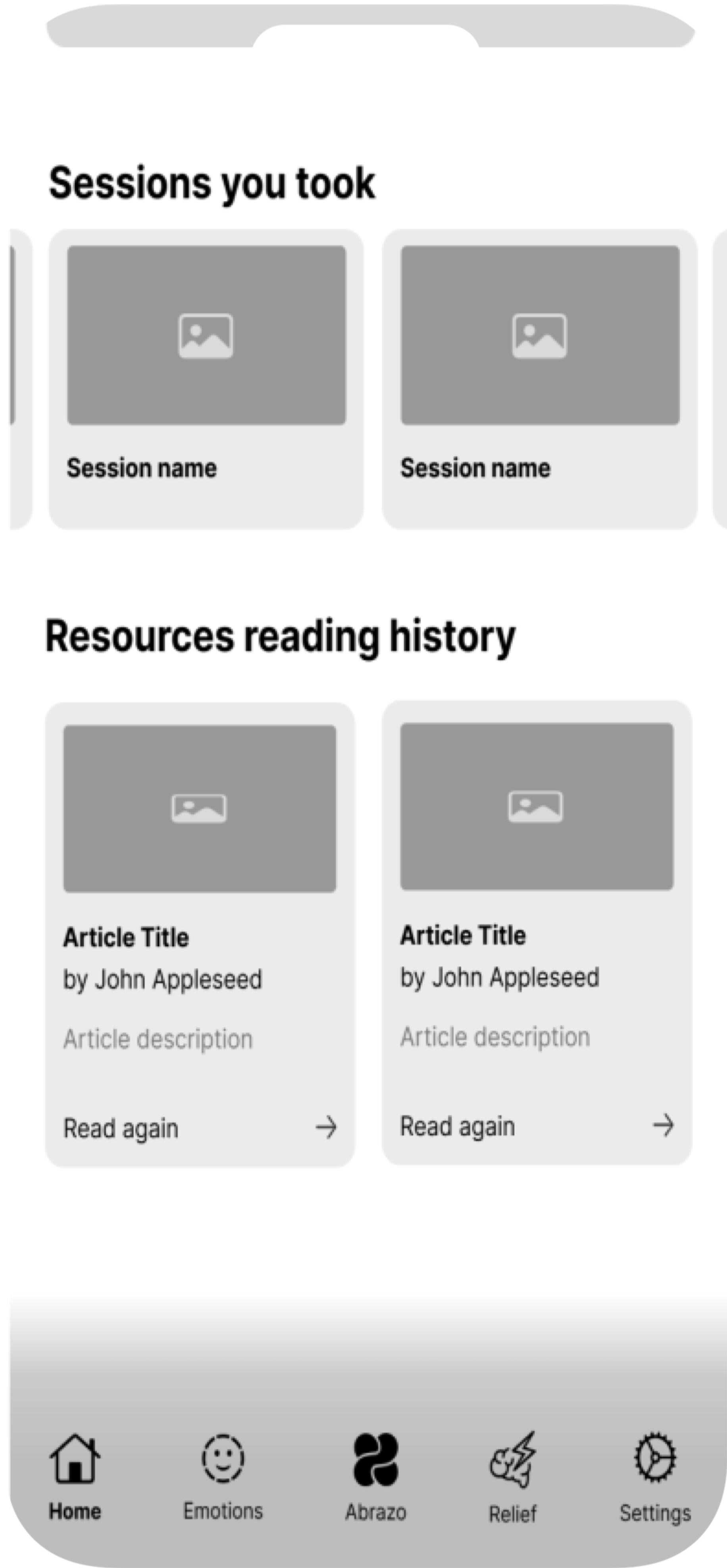
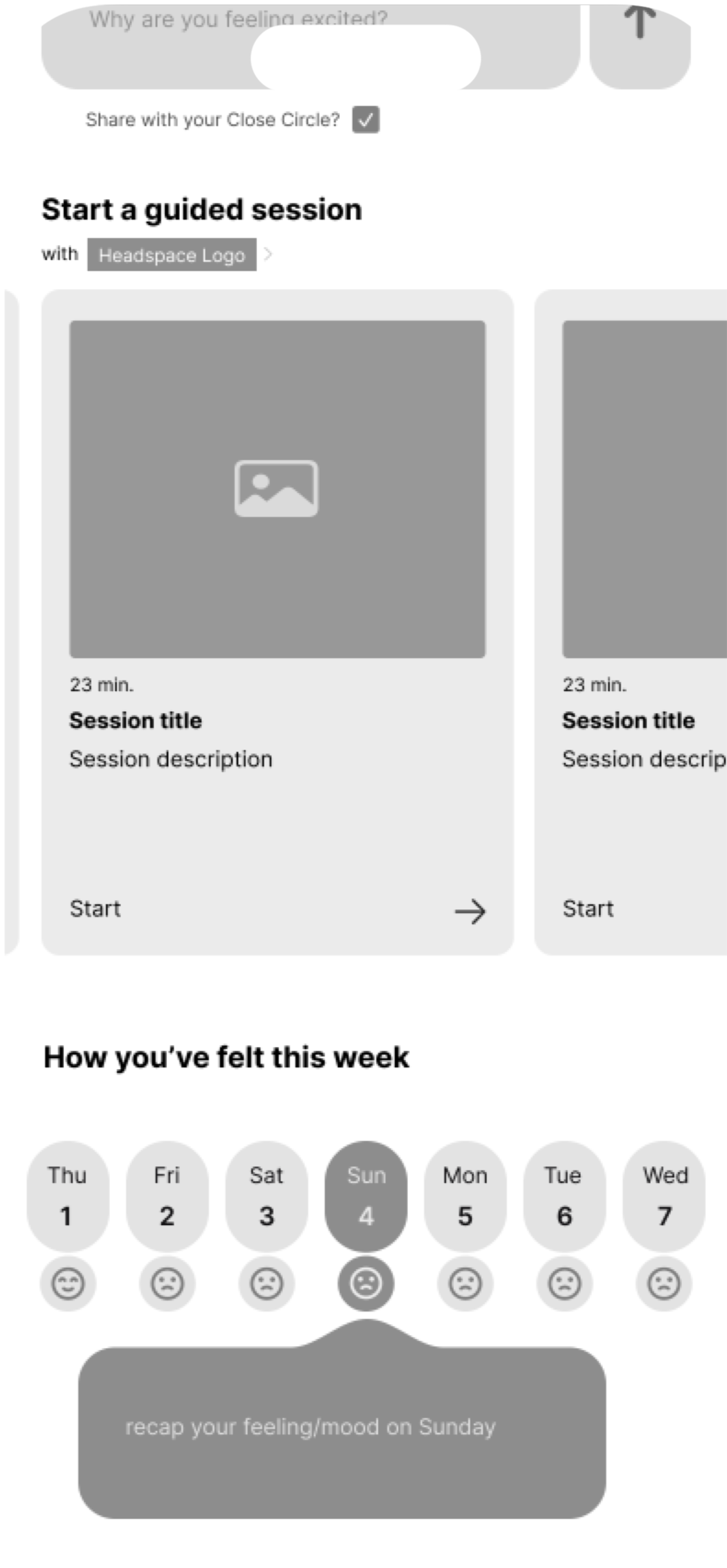
01 / HomeCheck-in, journaling, and relevant sessions.
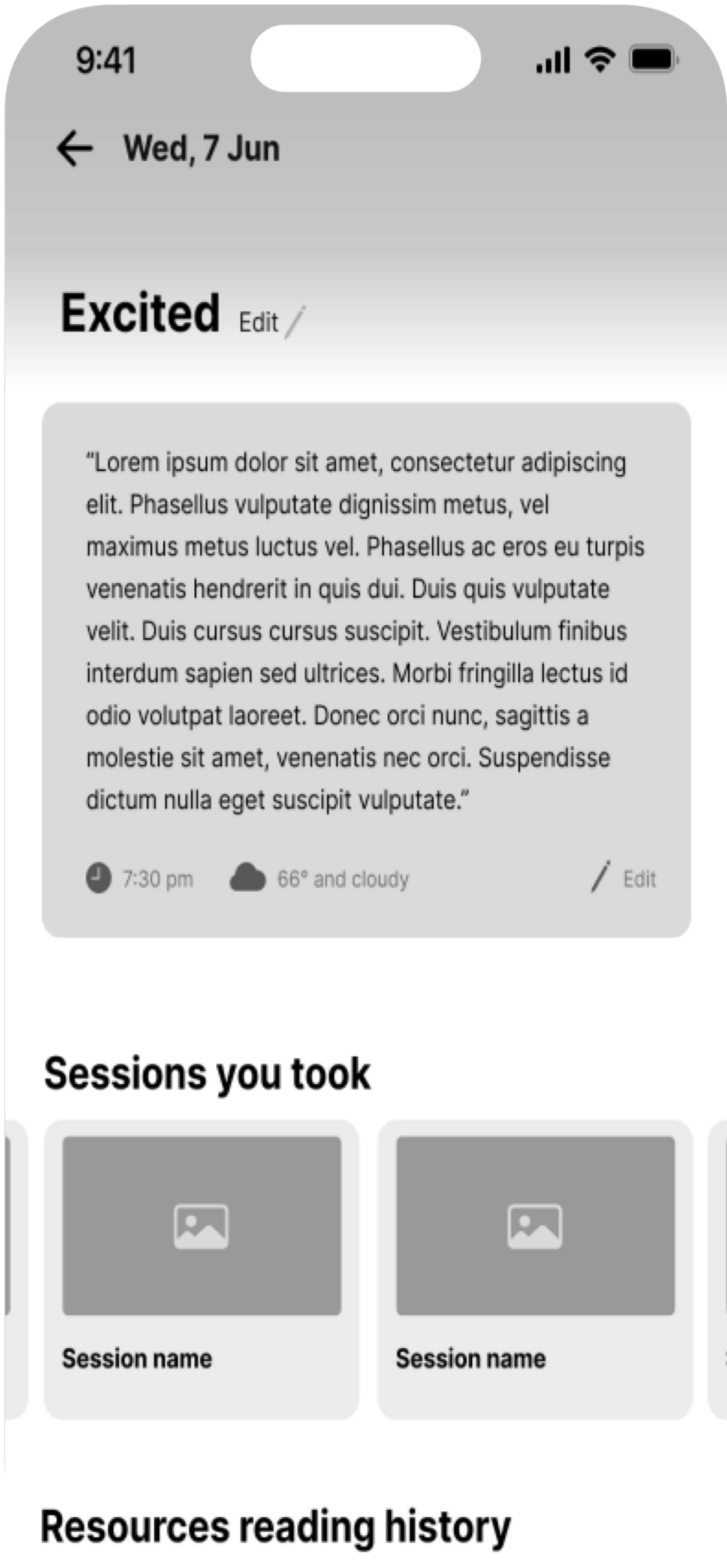
02 / EmotionsHistory, context, and sharing controls.
03 / ReliefSessions organized around current needs.
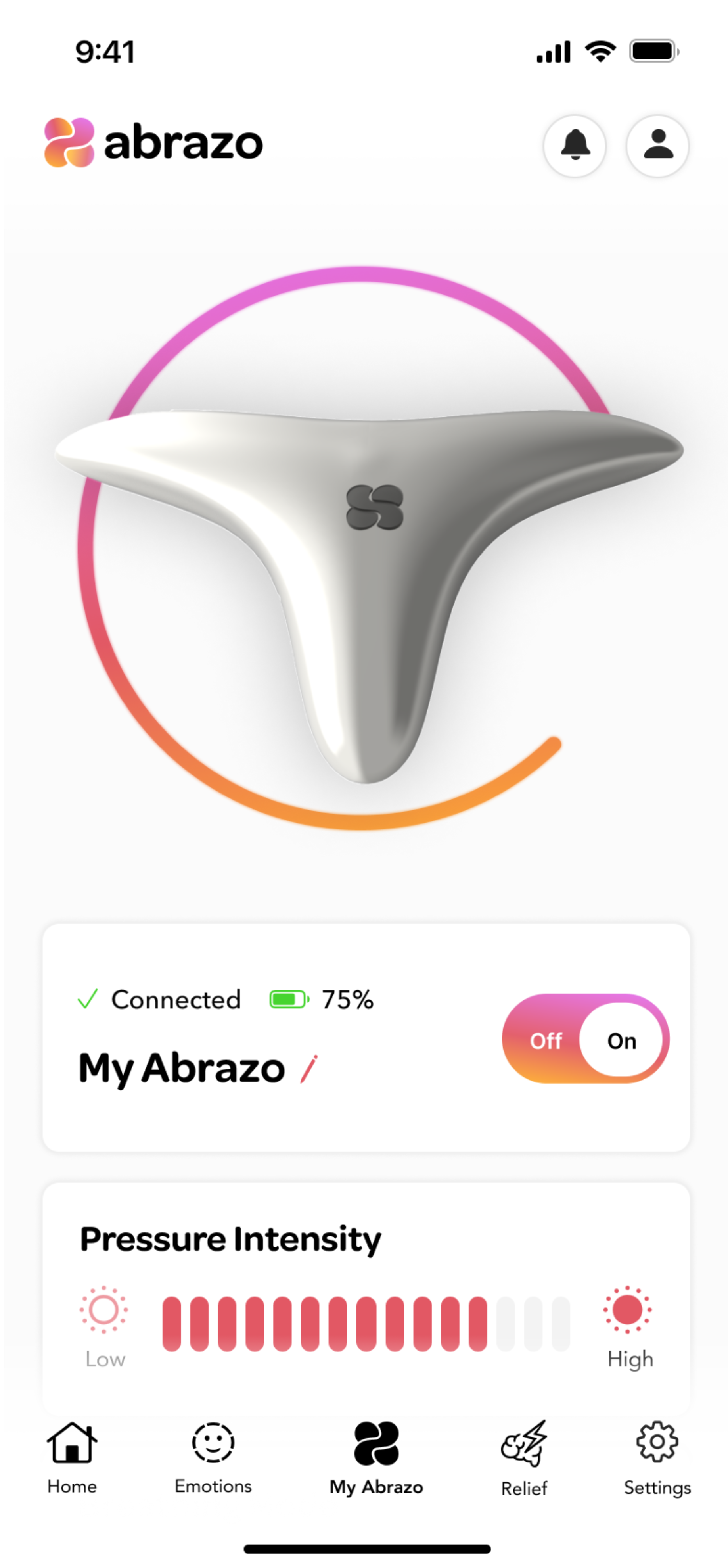
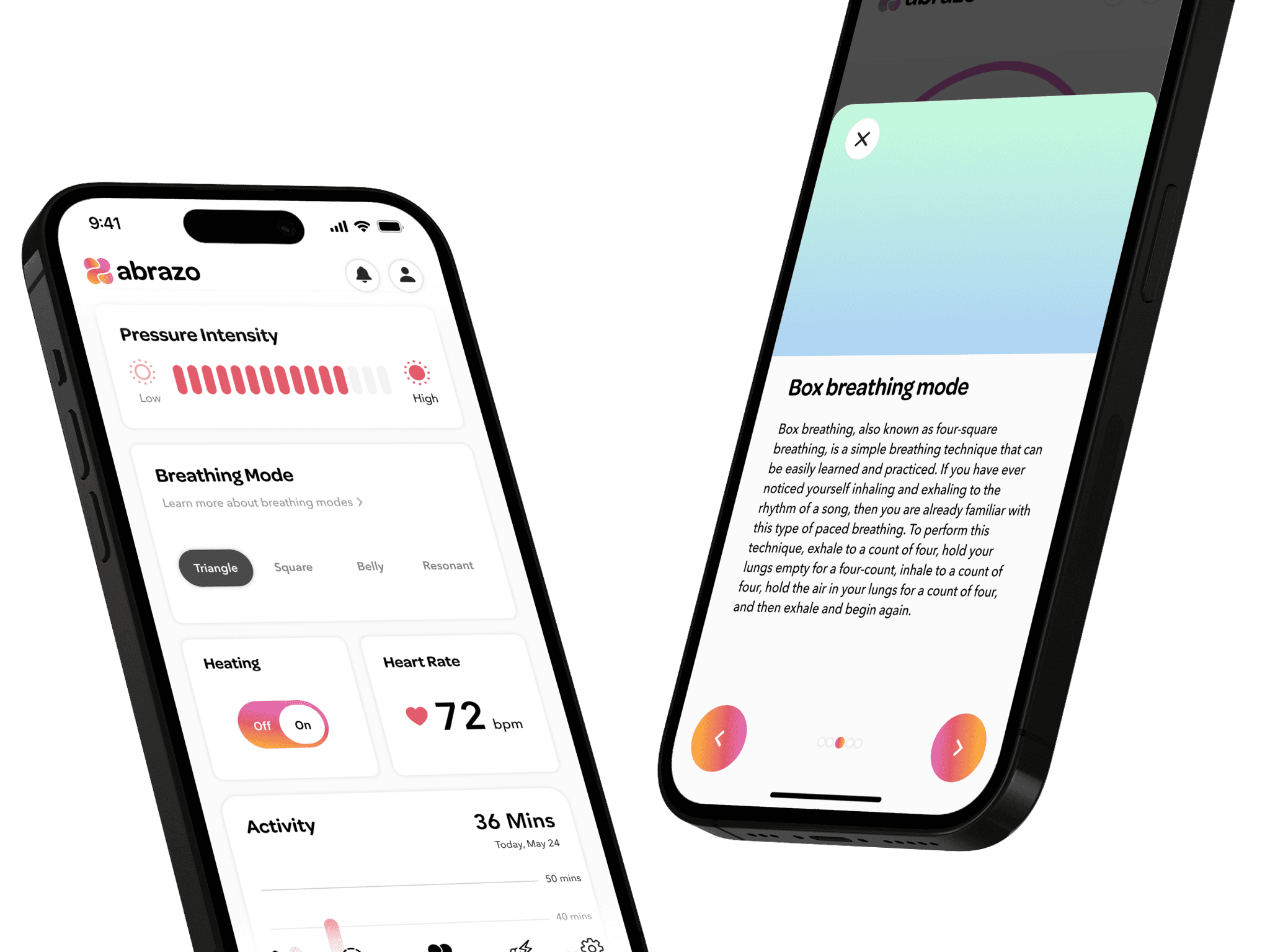
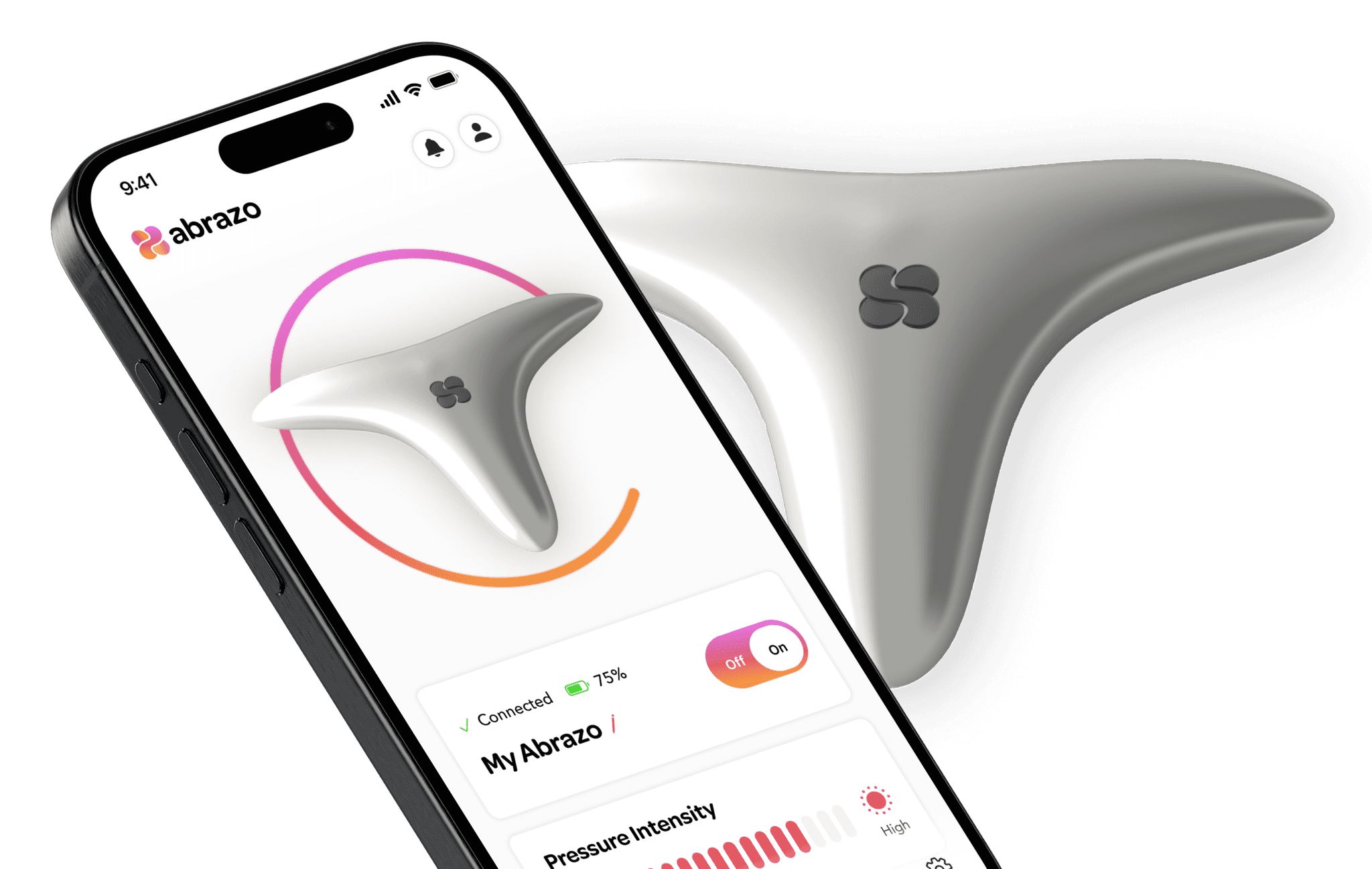
04 / My AbrazoConnection, intensity, warmth, and breathing.
What this changed
One component system connected emotion tracking, relief, sharing, and wearable controls.
Validate
Test whether people could act without added uncertainty.
Round one
Test the complete service path.
Seven participants completed 13 tasks across journaling, emotion history, guided support, sharing, and proposed wearable controls.
7participants13tasks5product areas
Round one
Results recorded for ten tasks
Successful attempts52 of 70
Attempts with trouble11 of 70
Failed attempts7 of 70
User feedback
Six changes were prioritized
Move provider sharingSettings or Profile
Rename “Abrazo”My Abrazo
Confirm health sharingVisible success state
Support closed-eye useVoice guidance
Support comprehensionSession imagery
Clarify sharing statusHigher contrast
Round-one outcome
The six documented findings became the revision plan for navigation, naming, confirmation, session accessibility, and permission controls.
Round two
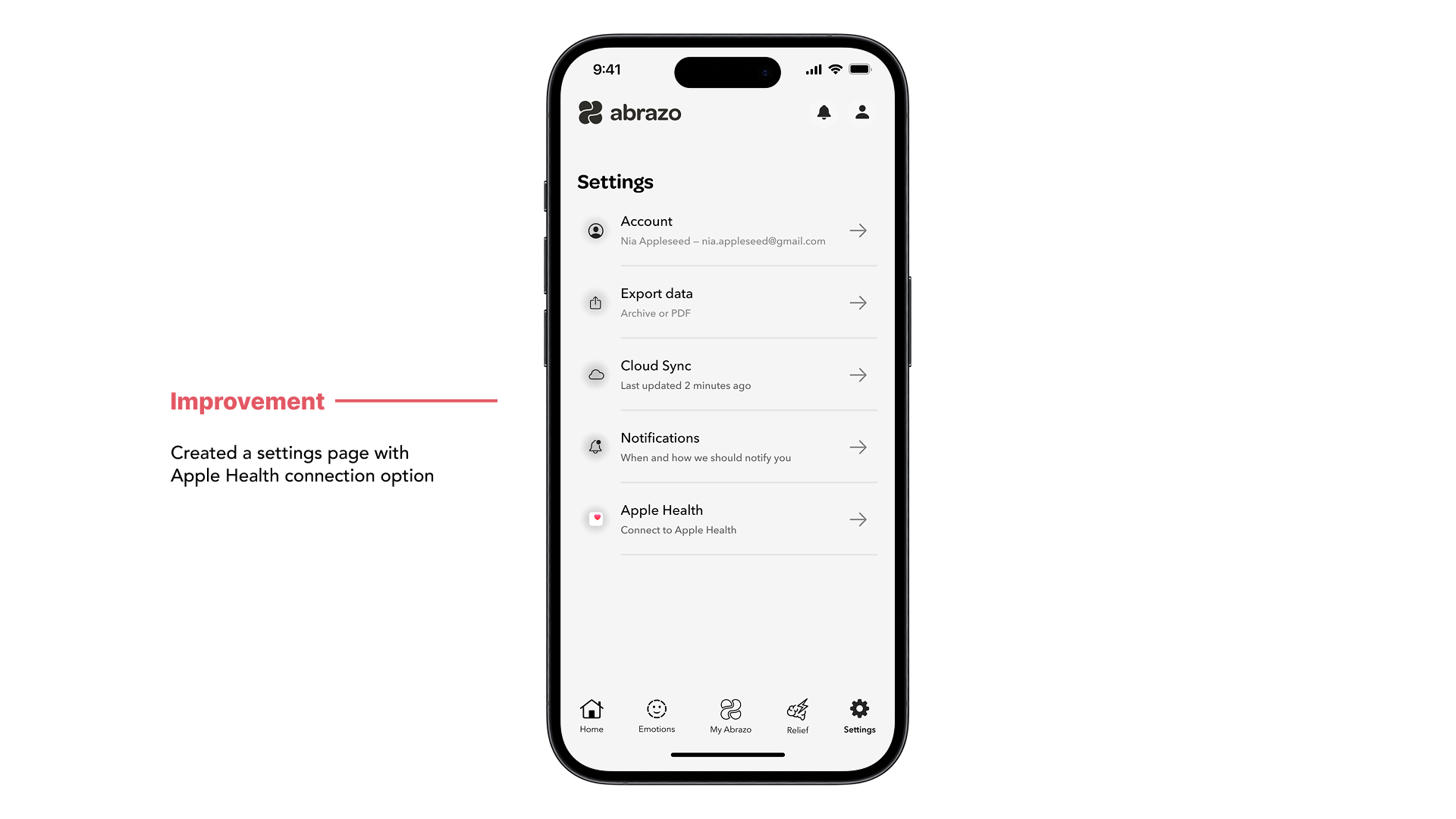
Turn feedback into visible interface changes.
Three returning participants tested ten revised tasks. The carousel connects the strongest Round One findings to the changes they produced.
Feedback to improvement
Successful attempts30 / 30
Every measured task was completed successfully.
Success rate74% → 100%
A 26-point improvement from Round One.
Trouble or failure18 → 0
No observed trouble or failure remained.
Round-two outcome
The returning participants completed all 30 attempts successfully, supporting the revised navigation, naming, and feedback states.
Physical concept
Evaluate discretion, comfort, and sensory fit.
Four prospective users and the expert then reviewed the physical concept. Their feedback supported its curved coverage, discreet size, and thickness, while the expert favored a smooth, single-color form without exposed buttons or prominent branding.
Concept interviews
4 prospective users + 1 expert
5
Discreet under clothing
Users supported the size and thickness because the form would remain visually quiet.
Comfortable coverage
The curved shape covered the areas users considered most important.
Reduce sensory triggers
The expert recommended a smooth, single-color form without exposed buttons or prominent logos.
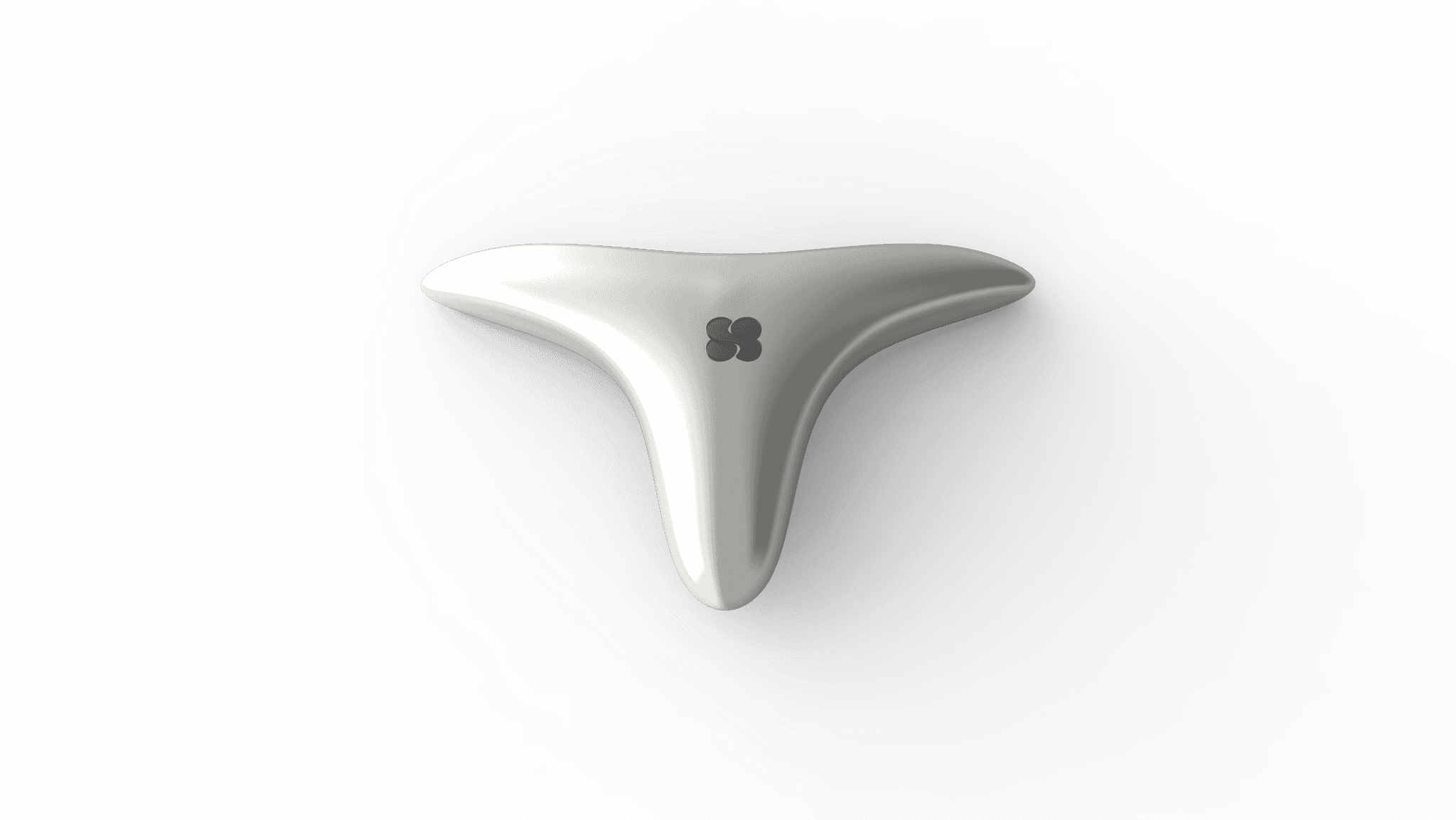
Discreet curved formDesigned to sit quietly beneath clothing.
Limitation
The harness, pressure mechanism, temperature behavior, materials, and long-term wear were not functionally validated. The documented next step was a fabric and harness prototype followed by additional testing.
The Solution
01 / PrepareSet preferences and trusted connections02 / RespondReach guided support with fewer decisions03 / ReflectReview and share only by choice
HomeCheck in and find supportEmotionsReview and record emotional contextReliefAccess guided supportMy AbrazoControl the wearable concept
Final physical-form concept
A discreet form for further testing.
Soft, continuous formThe proposed curved shell and minimal exterior responded to sensory and discretion concerns.
Conceptual pressure experiencePressure, warmth, vibration, and sensing remained proposed capabilities requiring engineering and clinical validation.
Project outcome
Research connected preparation, response, and reflection.
Abrazo concluded as a tested interface prototype and an evaluated physical-form concept. Testing supported clearer navigation and feedback states; clinical effectiveness, sensing, and the device mechanism remained unvalidated.
Written, animated, edited, and produced independently.
Reflection
What designing for emotional distress changed in my process.
What changed
Design the response around capacity
I learned to evaluate every task against the user’s likely cognitive and sensory capacity in the moment. Voice, imagery, confirmation, predictable navigation, and adjustable intensity were not polish; they shaped whether support could be usable at all.
What I would improve
Bring clinical and privacy specialists in earlier
The concept crossed into therapeutic claims, biometric sensing, and highly sensitive data. A stronger process would define clinical boundaries, safety requirements, and consent architecture before the feature set became this broad.
Next validation
Test a safe functional slice
I would begin with a supervised, non-diagnostic prototype focused on manual activation, comfort, guided breathing, accessible controls, and reversible permissions before considering automatic detection or physiological claims.
 International Design Awards